
Here’s the short answer: if your house already has good ductwork, central air is usually the cheaper way to add cooling. If it doesn’t — and most older capes, colonials, and triple-deckers around SouthCoast Massachusetts heated by a boiler don’t — a ductless mini split wins on installed cost, efficiency, and comfort, and it’s not close. As you compare equipment options, see our Mitsubishi vs. Carrier comparison.
That one question — does your house have ducts? — settles most of this fight before it starts. But there’s real money on both sides in 2026, plus rebates that can swing it by thousands. Let’s walk through it in plain English.
The Real Question: Does Your House Have Ductwork?
Central air needs ducts — the channels that carry cooled air to every room. Homes with forced hot air heat already have them. But a huge share of the housing stock in New Bedford, Fall River, and across the South Shore was built before central AC existed and heated with steam or hot-water boilers. Radiators don’t need ducts, so those houses never got any.
Adding ductwork to a finished older home means opening plaster walls and ceilings, giving up closet space for chases, and snaking trunk lines through attics never designed for them. Ductwork alone typically adds $2,100–$4,000 or more to a project — and in a 100-year-old two-story with plaster-and-lath walls, “or more” does a lot of work in that sentence. A ductless mini split skips all of that. (New to the terminology? Our plain-English what is HVAC guide covers the basics.)
Mini Split AC in Plain English
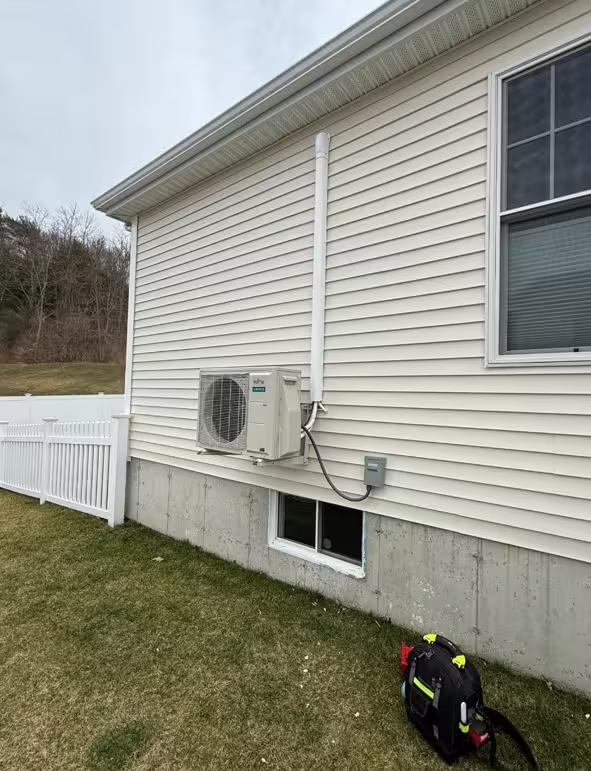
A mini split AC system has two main parts: an outdoor compressor unit and one or more slim indoor units (usually wall-mounted, sometimes ceiling or floor units) connected by a small refrigerant line set. That line needs only a roughly 3-inch hole through the wall — no ducts anywhere.
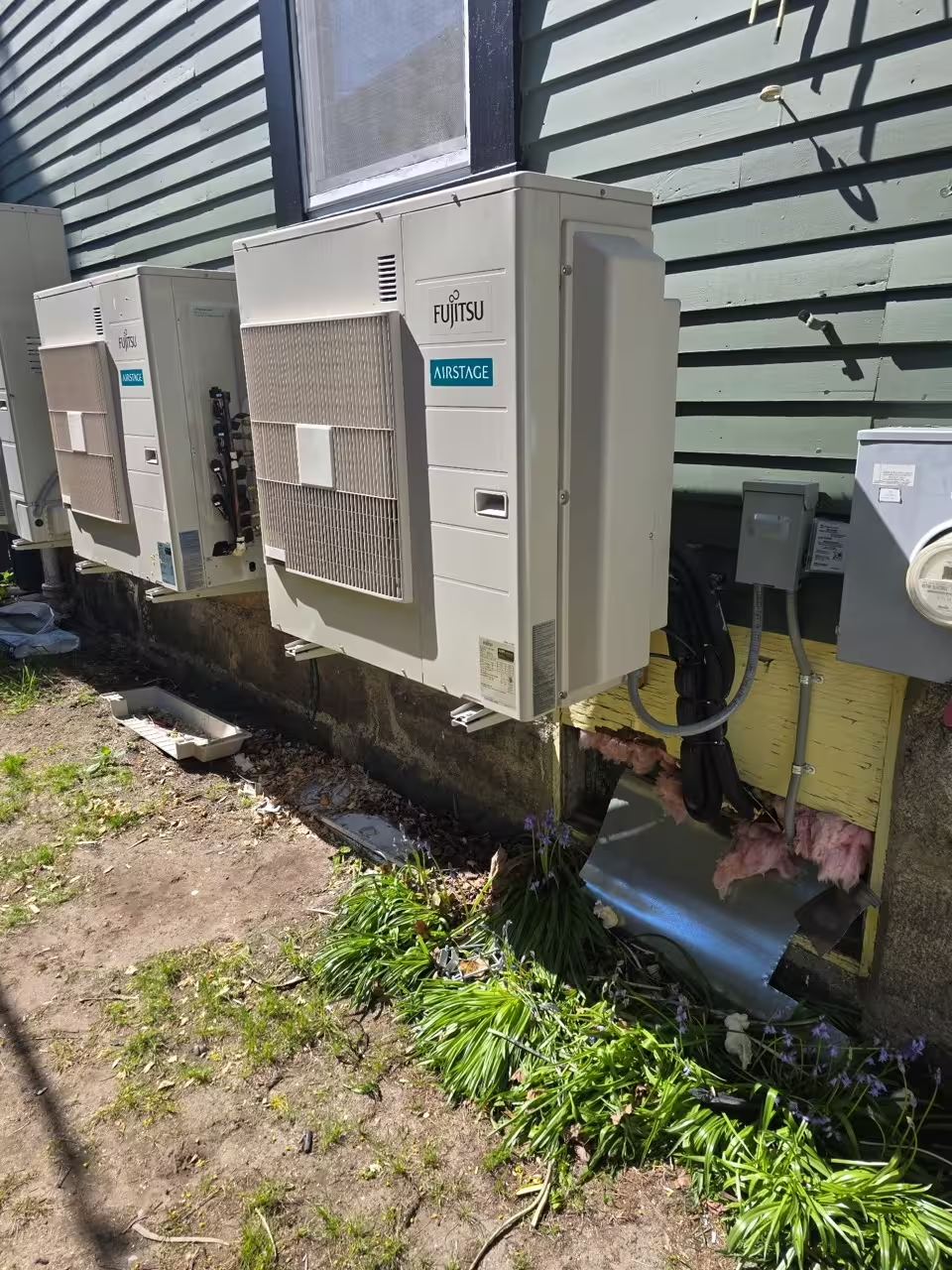
Each indoor unit — each “zone” — has its own remote and thermostat, so the bedroom can be 68 while the living room sits at 74. And here’s the part a lot of people miss: almost every mini split sold today is a heat pump. It cools in summer and heats in winter. Modern cold-climate models from Mitsubishi and Fujitsu — the two brands we install — keep pumping out heat well below zero. Our plain-English heat pump guide explains how, and our complete guide to Mitsubishi mini split systems digs into the product lines.
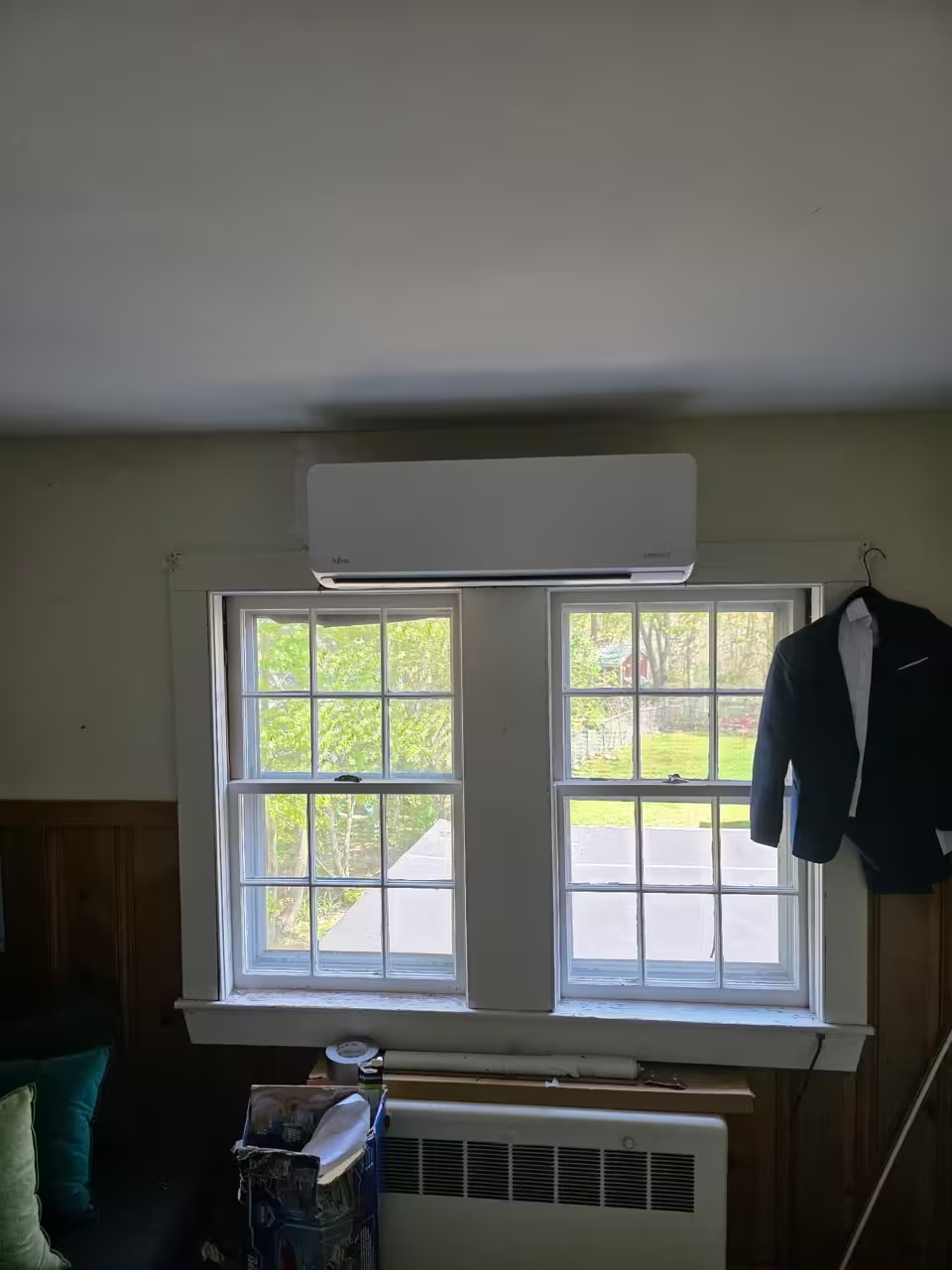
That heating side matters here, because so many older local homes burn oil. A ductless system doesn’t just add AC — it offsets expensive oil heat most of the winter while the boiler waits as backup. That’s the exact setup the region’s rebate programs are built to encourage. See everything we install on our heat pumps and mini split systems page.
Central Air in Plain English
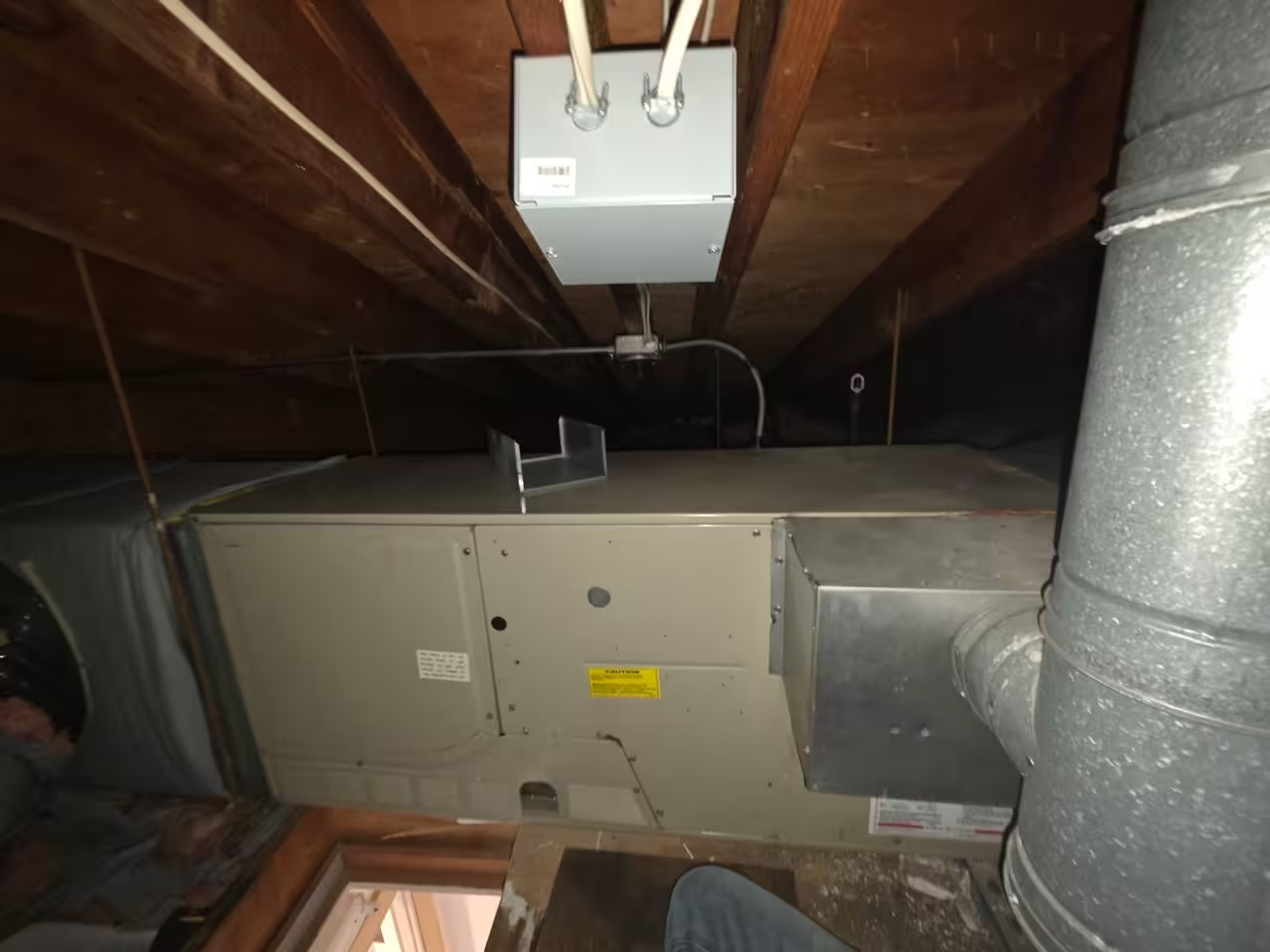
Central air is one outdoor condenser connected to an indoor coil (usually on top of your furnace’s air handler), pushing cooled air through ducts to every room. One thermostat, one temperature for the whole house.
Its strengths are real: it’s invisible (just registers in floors or ceilings), it filters and dehumidifies all the home’s air through one return, and if you already own a forced-air furnace, adding a coil and condenser is a straightforward job. If your ducted home’s furnace is getting old anyway, replacing both together — see our furnace installation and replacement page — is often the most cost-effective move of all.
Mini Split vs Central Air: Side-by-Side
| Ductless mini split | Central air | |
|---|---|---|
| Needs ductwork? | No — 3” hole per zone | Yes — existing or new |
| Installed cost (2026, typical) | $2,000–$5,500 single zone; $7,500–$14,500 whole house | $5,500–$12,000 with existing ducts; $10,500–$16,000 if adding ducts |
| Heats too? | Yes — nearly all are cold-climate heat pumps | No — cooling only (pair with furnace for heat) |
| Room-by-room control | Yes, every zone independent | No — one thermostat per system/zone |
| Efficiency | Highest — no duct losses, inverter-driven | Good, but ducts in hot attics leak and lose capacity |
| Looks | Visible indoor units on walls | Invisible — registers only |
| Whole-house air filtration | Per-room filters only | One central filter handles everything |
| Typical lifespan | 15–20 years | 12–15 years |
| Best rebates (MA/RI 2026) | Strong — heat pump programs apply | None — cooling-only doesn’t qualify |
| Best fit | Older homes without ducts, boiler/oil heat, additions | Homes with good existing ducts and forced-air heat |
Ductless vs Central Air: What Each Costs Installed in 2026
Honest, market-typical ranges. Line-set lengths, electrical panel capacity, and how hard your walls fight back all move the price — but here’s the 2026 landscape.
Mini split installation cost
- Single-zone mini split AC unit: roughly $2,000–$5,500 installed; most quality cold-climate installs land mid-to-upper range. (A basic garage unit can come in lower — see our garage mini split 110 vs 220 guide.)
- 2–3 zone ductless system: roughly $4,000–$9,000 installed.
- 4–5 zone whole-house system: roughly $7,500–$14,500 installed.
Southeastern Massachusetts and Rhode Island labor and permit costs tend to run above the national average, so the upper halves of those ranges are realistic here. For a deeper breakdown of what drives the price, read our complete mini split installation cost guide.
Central air installation cost
- Replacing central AC where good ducts already exist: roughly $5,500–$12,000 in 2026.
- Adding central air to a house with no ducts: typically $10,500–$16,000 — the system plus $2,100–$4,000+ of ductwork, plus wall and ceiling repairs afterward.
That second line is why this debate tilts ductless for older New England homes. By the time you’ve paid to cut ducts into a 1920s colonial, you could have installed a whole-house ductless system that also heats.
Why 2026 prices are higher: the refrigerant switch
If you’ve priced AC before and today’s quotes look steep, it’s not your imagination. Federal AIM Act rules pushed the industry off R-410A refrigerant, and new equipment now ships with lower-global-warming refrigerants like R-454B and R-32 — redesigned gear that typically costs 10–20% more than the old generation. The refrigerant itself is far pricier per pound too, which is driving up repair bills on aging systems — we break that down in our 2026 AC repair cost guide, and sometimes the repair-vs-replace math genuinely favors replacing.
Rebates that change the math (this is the big one)
- Mass Save (2026): whole-home heat pump systems that displace your primary heat qualify for $2,650 per ton, up to $8,500. Partial-home installs get $1,125 per ton (up to $8,500); even a basic single-zone gets $250 per ton up to $2,500. Income-eligible households can qualify for up to $16,000. Big 2026 catch: R-410A equipment no longer qualifies — the system must use a next-gen refrigerant (current Mitsubishi and Fujitsu cold-climate lines do). The 0% HEAT Loan remains available for qualifying projects.
- Rhode Island (2026): Clean Heat RI covers 60% of project cost up to $11,500 for qualifying cold-climate heat pumps (100% up to $18,000 income-eligible), with funds committed through the end of 2026. Rhode Island Energy adds per-ton rebates on qualifying equipment.
- Federal 25C tax credit: heads-up — the federal credit (up to $2,000 for heat pumps) expired December 31, 2025 and is not available for 2026 installs. The state programs above are now the whole ballgame.
Notice what’s missing: cooling-only central air gets essentially none of this. The rebates reward heat pumps. A ductless heat pump system in Massachusetts or Rhode Island can end up costing less out of pocket than central AC that only cools.
Want a real number for your house instead of a range? We’ll look at your layout, your heating setup, and what you actually qualify for — free, no pressure. See Available Times or call/text 508-521-9477.
Where Central Air Still Wins
Fair is fair — central air is the right call for plenty of homes:
- You already have good ductwork. Adding or replacing central AC on sound ducts is usually cheaper than a multi-zone ductless retrofit.
- You can’t live with wall units. Mini split heads are slim but visible; hidden options (ceiling cassettes, ducted air handlers) cost more.
- Whole-house filtration matters to you. One central return with a good media filter treats all the air — allergy households weigh this heavily.
- Lots of small rooms. A chopped-up floor plan can need more indoor heads than the budget likes, while existing ducts already reach everywhere.
Where a Ductless Mini Split Wins
- No ducts — the classic New England problem. Boiler-heated capes, colonials, triple-deckers, and seaside cottages from Fairhaven to Fall River. Ductless was invented for exactly this.
- You heat with oil. Run cheaper electric heat most of the season, hold the boiler in reserve — and unlock the big Mass Save money.
- The second floor is an oven every July. Room-by-room zoning fixes hot upstairs bedrooms without recooling the whole house.
- Additions, sunrooms, finished attics, garages. One zone, one small wall hole, done.
- Lowest operating cost. No duct losses, inverter compressors, and you only condition occupied rooms — a combination that beats central AC on running cost in most homes.
Decision Cheat-Sheet: Which One Fits Your House?
Choose a ductless mini split if… - ☐ Your home has radiators or baseboard and no ducts - ☐ You heat with oil (or expensive propane/electric baseboard) - ☐ You want heating and cooling from one system - ☐ You want Mass Save / Clean Heat RI rebate money - ☐ Certain rooms run hot or cold and you want zone control - ☐ You’re cooling an addition, attic, or garage
Choose central air if… - ☐ You have a forced-air furnace and ducts in good shape - ☐ You’re replacing an existing central AC (check our AC repair cost guide first — repair may still make sense) - ☐ You strongly prefer invisible equipment in every room - ☐ Whole-house filtration is a top priority
Either way, get these answered before you sign: - ☐ Is the equipment a next-gen refrigerant model (R-454B or R-32)? If not, it won’t qualify for 2026 MA/RI rebates. - ☐ Was the system sized with a load calculation, not a guess? - ☐ Does the quote spell out electrical work, permits, and rebate paperwork?
Still weighing full replacement against fixing what you have? Our air conditioning and heating pages cover both sides of the shop.
FAQ: Mini Split Air Conditioners and Ductless AC
Is a ductless mini split the same thing as a heat pump?
Almost always, yes. Nearly every ductless mini split sold today is a heat pump — it cools in summer and heats in winter. Cold-climate Mitsubishi and Fujitsu models keep near-full heat output well below zero, which is why so many MA and RI homeowners use them to displace oil heat, not just for AC.
How much does a mini split air conditioner cost installed?
In 2026: roughly $2,000–$5,500 for a quality single zone, $4,000–$9,000 for 2–3 zones, $7,500–$14,500 for a 4–5 zone whole-house system — and rebates can take thousands off. Full breakdown in our mini split installation cost guide.
Does ductless AC heat too, or just cool?
Almost all ductless AC systems installed today heat and cool. Cooling-only models exist, but in New England they rarely make sense — the heating side is what qualifies for Mass Save and Clean Heat RI rebates and cuts your winter oil or gas bill.
Is a mini split AC unit cheaper to run than central air?
Usually, yes. A mini split AC unit has no duct losses (ducts through hot attics waste a real share of a central system’s cooling), uses an inverter compressor that sips power instead of cycling hard, and cools only the rooms you’re using.
How long does ductless air conditioning last?
A well-installed ductless air conditioning system typically runs 15–20 years; central AC condensers average 12–15. Near the water, salt air corrodes outdoor coils, so an annual rinse and service visit protects either system.
Can a mini split really heat a house through a Massachusetts winter?
Yes — if it’s a cold-climate (“hyper-heat” class) model sized correctly; these are rated to deliver heat at -13°F and below. Many of our customers run mini splits as primary heat with the boiler as backup for the deepest cold snaps — exactly the setup Mass Save’s rebates are designed around. (Keeping the backup serviced is smart — see our furnace repair cost guide.)
The Bottom Line
For a New England home that already has healthy ductwork, central air remains a solid, cost-effective choice. For the thousands of older homes around SouthCoast MA, the South Shore, Cape Cod, and Rhode Island that were built around a boiler and never had ducts, the answer in 2026 is clear: a cold-climate ductless mini split costs less to install than adding ducts, costs less to run, heats as well as it cools, and is the only option the big state rebates will help pay for.
The honest move is to price your actual house, not a national average. Armus Mechanical installs Fujitsu and Mitsubishi cold-climate systems across Southeastern MA, Cape Cod, the South Shore, and Rhode Island — and we’ll tell you straight if central air (or keeping what you have) is the better play.
Get a straight answer for your house. See Available Times — pick a slot that works, no phone tag. Or call/text 508-521-9477. Armus Mechanical LLC, 143 Main St, Lakeville, MA 02347.