
HVAC stands for Heating, Ventilation, and Air Conditioning — the umbrella term for everything that keeps your house warm in January, cool in July, and breathing in between. Furnaces, boilers, central AC, heat pumps, ductless mini splits: all HVAC.
Here's why the definition suddenly matters. In 2026, homeowners across Southeastern Massachusetts are getting three quotes for "a new HVAC system" and seeing prices that are thousands of dollars apart — because the three contractors are quietly quoting three different types of system. Once you know what each type actually is, you can spot which quote matches your house and which one is padding the ticket.
Let's fix that in plain English.
HVAC Meaning: What Those Four Letters Actually Cover
The HVAC meaning breaks down like this:
- H — Heating. Whatever makes the warm: a gas or oil furnace, a boiler feeding radiators or baseboard, or a heat pump.
- V — Ventilation. Moving air in, out, and around — ductwork, exhaust fans, fresh-air intakes. In older New England homes, "ventilation" is often just leaky windows, which is part of why heating bills here hurt.
- AC — Air Conditioning. Central AC, a heat pump running in reverse, or wall-mounted mini split heads.
One important thing the acronym hides: most homes around here don't have one HVAC system — they have a patchwork. A 1920s Fall River triple-decker might have a gas boiler for heat and window units for summer. A Lakeville ranch might have a furnace with central AC bolted on. When a contractor quotes "HVAC replacement," the first question is which pieces of the patchwork are we replacing?
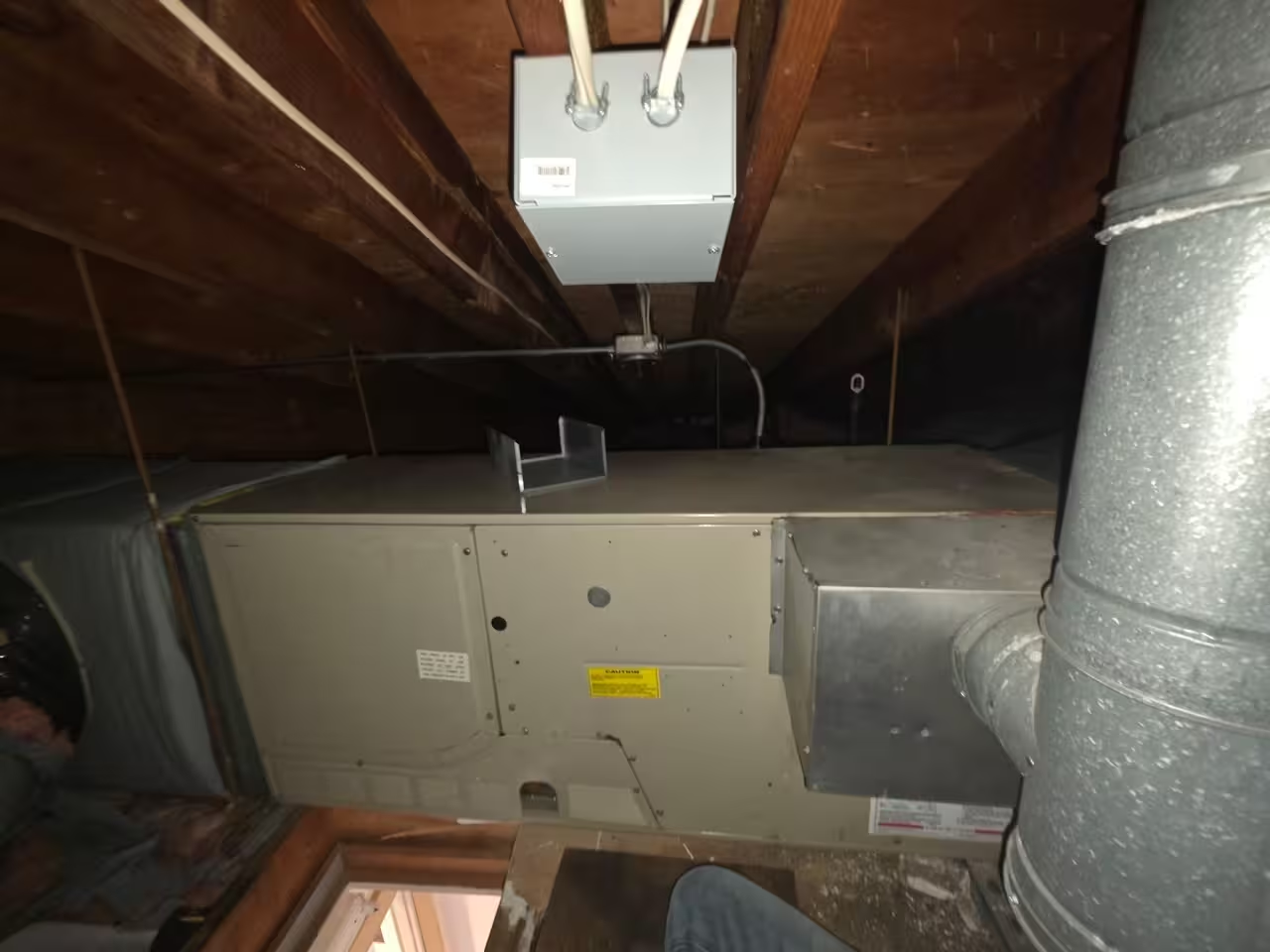
What Is an HVAC System, Exactly? The Three Jobs
Every HVAC system, from a 100-year-old steam boiler to a brand-new Mitsubishi hyper-heat setup, does some combination of three jobs:
- Make hot or cold (furnace burner, boiler, compressor).
- Move it around the house (ducts and a blower, water pipes and radiators, or refrigerant lines to wall units).
- Control it (thermostats and zone controls).
The delivery method — job #2 — is what actually determines your options and your price. Homes with existing ductwork can take central AC or a ducted heat pump cheaply. Homes with radiators and no ducts (a huge share of the housing stock in New Bedford and Fall River) either pay a premium to add ducts or skip them entirely with ductless equipment.
What is a split system HVAC?
You'll see "split system" on most quotes. It just means the equipment comes in two halves: an outdoor unit (the compressor/condenser box beside your house) and an indoor unit (an air handler or furnace coil in the basement, or a wall-mounted head), connected by copper refrigerant lines. Central AC is a split system. A ductless mini split is also a split system — "mini" refers to the smaller indoor heads, and "ductless" means no ductwork needed. A "packaged unit," by contrast, puts everything in one outdoor cabinet; those are rare on residential jobs in this region.
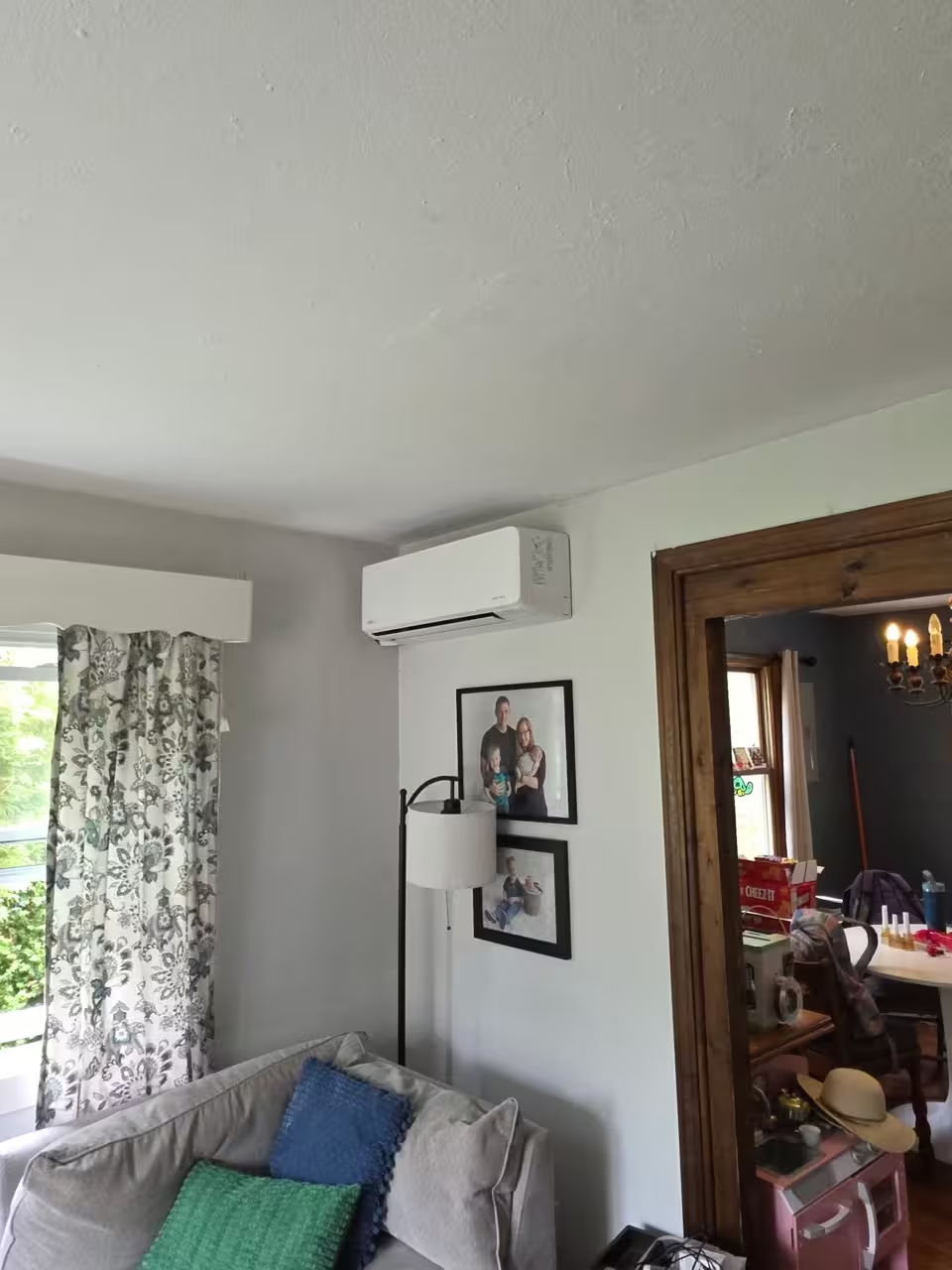
Every Type of Home HVAC Unit, Compared
Here's the whole residential menu side by side — what each system is, what it does, and where it makes sense in a New England house:
| System | Heats? | Cools? | Needs ducts? | Best fit around here |
|---|---|---|---|---|
| Gas/oil furnace | Yes | No | Yes | Homes with existing ductwork; pairs with central AC |
| Boiler (gas or oil) | Yes | No | No (pipes/radiators) | Older homes with radiators or baseboard — very common in SE-MA |
| Central AC | No | Yes | Yes | Ducted homes that keep a furnace for heat |
| Ducted heat pump | Yes | Yes | Yes | Ducted homes replacing furnace + AC with one system |
| Ductless mini split | Yes | Yes | No | Radiator/baseboard homes, additions, garages, room-by-room comfort |
| Oil heat (furnace or boiler + tank) | Yes | No | Either | Legacy systems; many owners now converting to heat pumps |
A few notes the table can't hold:
- Furnaces vs. boilers confuse everyone. A furnace heats air and pushes it through ducts. A boiler heats water and sends it to radiators or baseboard. If your house has radiators, you have a boiler, and quotes for "furnace replacement" don't apply to you.
- Heat pumps do both jobs. A modern cold-climate heat pump heats and cools with one system — and yes, today's units hold their output through real Massachusetts winters. If you want the full plain-English version, read our new guide: What Is a Heat Pump?
- Mini splits are the no-ductwork answer. Wall-mounted Fujitsu or Mitsubishi heads, each cooling and heating its own zone. Our complete guide to Mitsubishi mini split systems covers how they work; if you're weighing them against ducted cooling, see Mini Split AC vs Central Air.
- Oil heat is still everywhere on the SouthCoast. Plenty of homes from Dartmouth to Fairhaven run oil boilers with a tank in the basement. They work, but aging tanks are a liability — see our oil tank replacement page — and oil-to-heat-pump conversions earn the biggest rebates going.
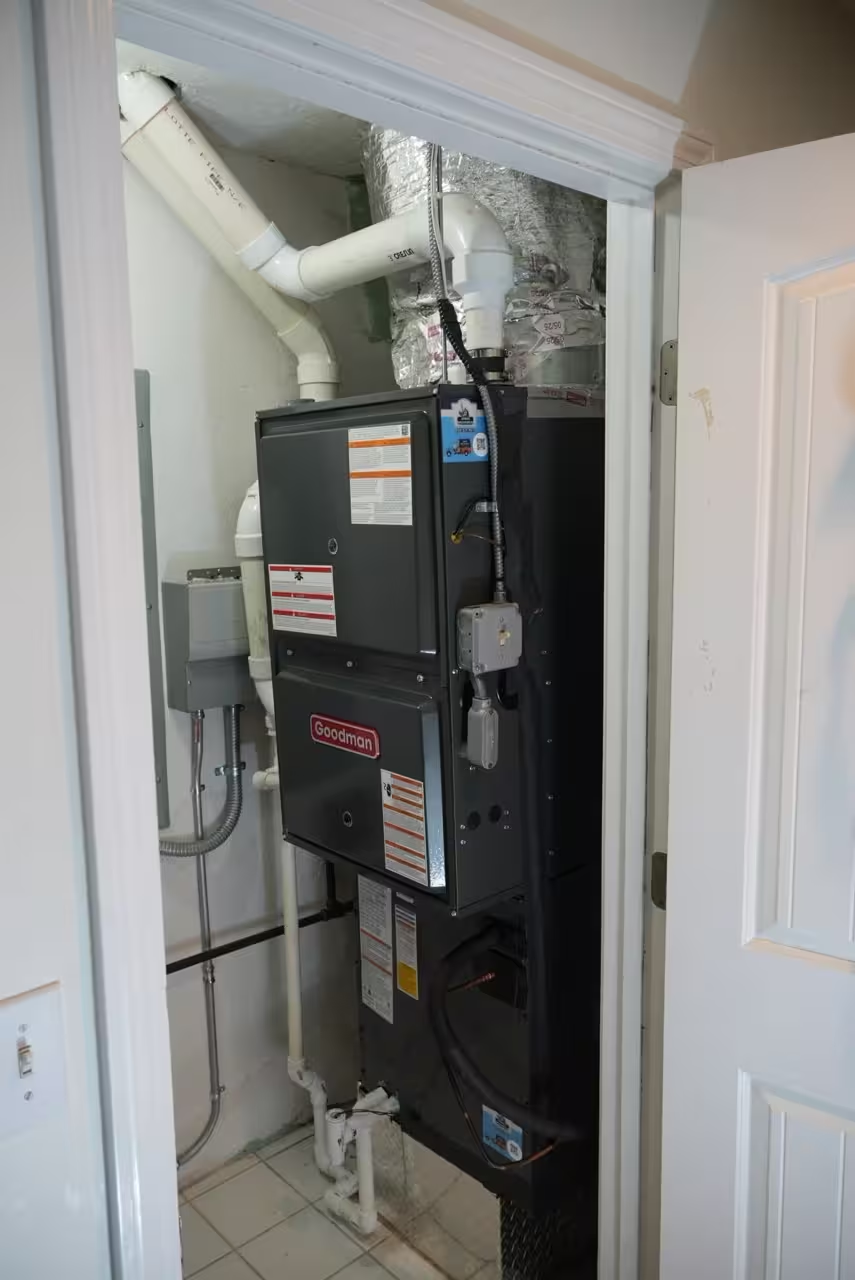
Why Three Contractors Give You Three Wildly Different Quotes in 2026
This is the part nobody explains, and it's why 2026 quotes feel chaotic. Three real things changed:
1. The federal tax credit died. The 25C Energy Efficient Home Improvement Credit — worth up to $2,000 on heat pumps — expired December 31, 2025. Equipment installed in 2026 doesn't qualify. A contractor still promising you "the federal credit" is working from last year's pitch, which tells you something about the rest of their quote.
2. The refrigerant changeover. Under the federal AIM Act, new AC and heat-pump equipment moved from R-410A to lower-impact refrigerants like R-454B and R-32 starting in 2025. The new R-454B supply ran tight through the transition and got expensive, and equipment built for it costs more than the old stuff did. One contractor may quote leftover R-410A-based equipment (cheaper now, but Mass Save dropped R-410A models from its qualified list on January 1, 2026 — so no rebate), while another quotes a current R-454B system that costs more up front but keeps you rebate-eligible. Same house, honest gap of thousands.
3. Rebates only apply to some quotes. Mass Save's 2026 whole-home heat pump rebate pays $2,650 per ton, capped at $8,500. That can make a heat pump conversion cheaper out-of-pocket than a like-for-like furnace swap that gets no rebate — but only if the contractor spec'd qualifying equipment and does the paperwork.
So when three quotes land at, say, $8,000, $14,000, and $19,000, they're often not three prices for the same thing. They're a furnace swap, a rebate-eligible heat pump conversion, and an oversized everything-plus-ductwork proposal. Ask every bidder two questions: "Exactly which components does this replace?" and "Is this equipment on the 2026 Mass Save qualified list?" The vague answer is the one to walk away from. (Repairs have the same confusion problem — we broke down what's fair in Furnace Repair Cost 2026 and AC Repair Cost 2026.)
HVAC Replacement Cost in 2026: Real Numbers
Here's what hvac replacement actually costs right now. These are typical U.S. installed ranges for 2026 — your house's ductwork, electrical, and layout move the needle:
| Replacement | Typical 2026 installed range |
|---|---|
| Full HVAC system (heating + cooling) | ~$11,600–$14,100 national average |
| Central AC only | $3,500–$10,000 |
| Gas furnace | $2,500–$8,000+ |
| Boiler (gas) | $4,000–$9,000 |
| Boiler (oil) | ~$4,800–$9,000 |
| Ducted heat pump | $9,400–$16,750 typical |
| Ductless mini split, single zone | $2,000–$6,000 |
| Ductless mini split, 3 zones | $6,000–$11,000 |
What moves your price inside those ranges: system size, equipment tier, line-set and duct runs, electrical panel capacity, and how hard your basement or attic is to work in. For the ductless side specifically, our mini split installation cost guide breaks down every line item.
Now subtract the local money. This is where Massachusetts and Rhode Island homeowners have a real edge in 2026:
- Mass Save (MA): whole-home heat pump rebate of $2,650/ton up to $8,500; partial-home (keep your boiler as backup) $1,125/ton, also capped at $8,500. The 0% HEAT Loan remains available for financing. Equipment must use the new refrigerants to qualify.
- Clean Heat RI (RI): covers 60% of a heat pump project up to $11,500 for standard-income households — and up to 100% (max $18,000) for income-eligible households. The program is funded through December 31, 2026, so Rhode Island buyers have a real deadline.
- Rhode Island Energy adds per-ton utility rebates on qualifying heat pumps on top.
Run the math and a rebated heat pump or mini split system often lands at or below the price of the fossil-fuel swap — which is exactly why "just replace the furnace" is no longer the automatic cheap answer.
Want a number for your house instead of a national range? Armus Mechanical gives free, no-pressure quotes across SouthCoast MA, the South Shore, Cape Cod, and RI — and we handle the Mass Save paperwork. See Available Times or call 508-521-9477.
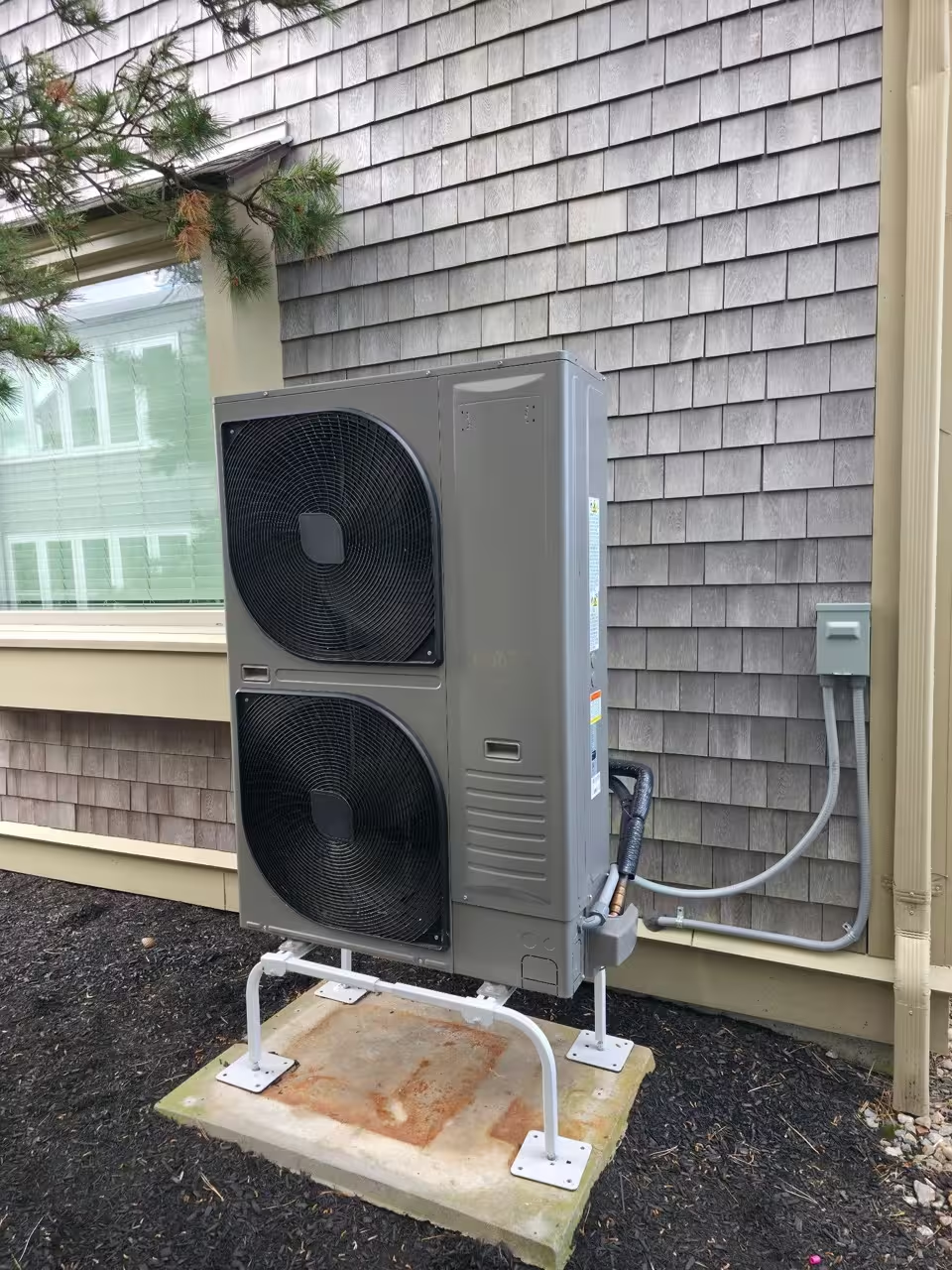
Which System Does Your House Actually Need? A 60-Second Cheat Sheet
Match your situation to the honest answer:
- You have ducts + a working furnace, AC died: replace the central AC — or price a ducted heat pump against it, since the rebate may close the gap.
- You have ducts, both furnace and AC are old: one ducted heat pump replaces both. Compare it to a furnace + AC combo before signing anything.
- You have radiators/baseboard and no ducts: ductless mini splits for cooling (and most of your heating), keep the boiler as backup. This is the classic SE-Mass older-home play, and it qualifies for the partial-home rebate.
- You heat with oil and the tank or boiler is aging: get the oil-to-heat-pump conversion quoted with rebates applied before spending big on oil equipment. Keep the existing system maintained meanwhile — our oil burner and furnace maintenance guide covers the basics.
- One problem room, garage, or addition: a single-zone mini split, not a whole-system overhaul. (Garage-specific? See 110 vs 220 mini splits for garages.)
- Everything works but bills are brutal: service and tune-up first; also sanity-check the water heater, a quiet chunk of many energy bills.
Two rules that protect you regardless: never accept a quote that doesn't name the exact equipment model, and never let anyone size a system without looking at your actual house — square footage guessing over the phone is how you get an oversized unit that short-cycles for 15 years.
HVAC FAQ
What does HVAC stand for?
Heating, Ventilation, and Air Conditioning. It covers every system that heats, cools, or moves air in your home — furnace, boiler, central AC, heat pump, and mini splits included.
What is an HVAC system?
The combination of equipment doing three jobs: making hot or cold, moving it through the house (ducts, pipes, or refrigerant lines), and controlling it (thermostats). Most older New England homes run a mixed system — like a boiler for heat plus mini splits for cooling — rather than one all-in-one setup.
What is an HVAC unit?
Usually one component — the outdoor condenser, the basement furnace, or a wall-mounted head. When a contractor says "replace the unit," make them specify which component, because a condenser swap and a full-system replacement are thousands of dollars apart.
What is a split system HVAC?
Any system split into an outdoor unit and an indoor unit connected by refrigerant lines. Central AC and ductless mini splits are both split systems; "ductless" just means the indoor half hangs on your wall instead of feeding ductwork.
How much does HVAC replacement cost in 2026?
Typical national installed ranges: full system ~$11,600–$14,100; central AC $3,500–$10,000; gas furnace $2,500–$8,000+; boiler $4,000–$9,000; ducted heat pump $9,400–$16,750; single-zone mini split $2,000–$6,000. In MA, 2026 Mass Save rebates up to $8,500 can substantially cut heat-pump conversions; RI's Clean Heat program covers up to 60% ($11,500 cap) through the end of 2026.
How long does an HVAC system last?
Furnaces 15–20 years, boilers 15–25, central AC 12–15, heat pumps and mini splits 12–15+ with annual maintenance. On the coast, salt air is rough on outdoor coils — homes near the water should budget for yearly cleanings to hit those numbers.
The Bottom Line
HVAC is just the umbrella word — the decision that matters is which system fits your house's bones: ducts or no ducts, oil or gas or electric, one problem room or the whole home. In 2026, the quote confusion is real (expired federal credit, new refrigerants, rebate-eligible vs. not), but it's beatable: make every contractor name the exact equipment, say what it replaces, and confirm it qualifies for Mass Save or Clean Heat RI money. Do that, and the three wildly different prices suddenly explain themselves.
Armus Mechanical installs and services all of it — heat pumps and mini splits, central AC, furnaces, boilers, and oil heating systems — from our shop in Lakeville across SouthCoast MA, the South Shore, Cape Cod, and Rhode Island. We'll tell you plainly which system your house needs and which rebates you qualify for, with no pressure and no mystery line items.
Ready for a straight answer on your own heating and cooling? See Available Times or call us right now: 508-521-9477. Armus Mechanical LLC · 143 Main St, Lakeville, MA 02347
HVAC stands for Heating, Ventilation, and Air Conditioning — the umbrella term for everything that keeps your house warm in January, cool in July, and breathing in between. Furnaces, boilers, central AC, heat pumps, ductless mini splits: all HVAC.
Here's why the definition suddenly matters. In 2026, homeowners across Southeastern Massachusetts are getting three quotes for "a new HVAC system" and seeing prices that are thousands of dollars apart — because the three contractors are quietly quoting three different types of system. Once you know what each type actually is, you can spot which quote matches your house and which one is padding the ticket.
Let's fix that in plain English.
HVAC Meaning: What Those Four Letters Actually Cover
The HVAC meaning breaks down like this:
- H — Heating. Whatever makes the warm: a gas or oil furnace, a boiler feeding radiators or baseboard, or a heat pump.
- V — Ventilation. Moving air in, out, and around — ductwork, exhaust fans, fresh-air intakes. In older New England homes, "ventilation" is often just leaky windows, which is part of why heating bills here hurt.
- AC — Air Conditioning. Central AC, a heat pump running in reverse, or wall-mounted mini split heads.
One important thing the acronym hides: most homes around here don't have one HVAC system — they have a patchwork. A 1920s Fall River triple-decker might have a gas boiler for heat and window units for summer. A Lakeville ranch might have a furnace with central AC bolted on. When a contractor quotes "HVAC replacement," the first question is which pieces of the patchwork are we replacing?

What Is an HVAC System, Exactly? The Three Jobs
Every HVAC system, from a 100-year-old steam boiler to a brand-new Mitsubishi hyper-heat setup, does some combination of three jobs:
- Make hot or cold (furnace burner, boiler, compressor).
- Move it around the house (ducts and a blower, water pipes and radiators, or refrigerant lines to wall units).
- Control it (thermostats and zone controls).
The delivery method — job #2 — is what actually determines your options and your price. Homes with existing ductwork can take central AC or a ducted heat pump cheaply. Homes with radiators and no ducts (a huge share of the housing stock in New Bedford and Fall River) either pay a premium to add ducts or skip them entirely with ductless equipment.
What is a split system HVAC?
You'll see "split system" on most quotes. It just means the equipment comes in two halves: an outdoor unit (the compressor/condenser box beside your house) and an indoor unit (an air handler or furnace coil in the basement, or a wall-mounted head), connected by copper refrigerant lines. Central AC is a split system. A ductless mini split is also a split system — "mini" refers to the smaller indoor heads, and "ductless" means no ductwork needed. A "packaged unit," by contrast, puts everything in one outdoor cabinet; those are rare on residential jobs in this region.

Every Type of Home HVAC Unit, Compared
Here's the whole residential menu side by side — what each system is, what it does, and where it makes sense in a New England house:
| System | Heats? | Cools? | Needs ducts? | Best fit around here |
|---|---|---|---|---|
| Gas/oil furnace | Yes | No | Yes | Homes with existing ductwork; pairs with central AC |
| Boiler (gas or oil) | Yes | No | No (pipes/radiators) | Older homes with radiators or baseboard — very common in SE-MA |
| Central AC | No | Yes | Yes | Ducted homes that keep a furnace for heat |
| Ducted heat pump | Yes | Yes | Yes | Ducted homes replacing furnace + AC with one system |
| Ductless mini split | Yes | Yes | No | Radiator/baseboard homes, additions, garages, room-by-room comfort |
| Oil heat (furnace or boiler + tank) | Yes | No | Either | Legacy systems; many owners now converting to heat pumps |
A few notes the table can't hold:
- Furnaces vs. boilers confuse everyone. A furnace heats air and pushes it through ducts. A boiler heats water and sends it to radiators or baseboard. If your house has radiators, you have a boiler, and quotes for "furnace replacement" don't apply to you.
- Heat pumps do both jobs. A modern cold-climate heat pump heats and cools with one system — and yes, today's units hold their output through real Massachusetts winters. If you want the full plain-English version, read our new guide: What Is a Heat Pump?
- Mini splits are the no-ductwork answer. Wall-mounted Fujitsu or Mitsubishi heads, each cooling and heating its own zone. Our complete guide to Mitsubishi mini split systems covers how they work; if you're weighing them against ducted cooling, see Mini Split AC vs Central Air.
- Oil heat is still everywhere on the SouthCoast. Plenty of homes from Dartmouth to Fairhaven run oil boilers with a tank in the basement. They work, but aging tanks are a liability — see our oil tank replacement page — and oil-to-heat-pump conversions earn the biggest rebates going.

Why Three Contractors Give You Three Wildly Different Quotes in 2026
This is the part nobody explains, and it's why 2026 quotes feel chaotic. Three real things changed:
1. The federal tax credit died. The 25C Energy Efficient Home Improvement Credit — worth up to $2,000 on heat pumps — expired December 31, 2025. Equipment installed in 2026 doesn't qualify. A contractor still promising you "the federal credit" is working from last year's pitch, which tells you something about the rest of their quote.
2. The refrigerant changeover. Under the federal AIM Act, new AC and heat-pump equipment moved from R-410A to lower-impact refrigerants like R-454B and R-32 starting in 2025. The new R-454B supply ran tight through the transition and got expensive, and equipment built for it costs more than the old stuff did. One contractor may quote leftover R-410A-based equipment (cheaper now, but Mass Save dropped R-410A models from its qualified list on January 1, 2026 — so no rebate), while another quotes a current R-454B system that costs more up front but keeps you rebate-eligible. Same house, honest gap of thousands.
3. Rebates only apply to some quotes. Mass Save's 2026 whole-home heat pump rebate pays $2,650 per ton, capped at $8,500. That can make a heat pump conversion cheaper out-of-pocket than a like-for-like furnace swap that gets no rebate — but only if the contractor spec'd qualifying equipment and does the paperwork.
So when three quotes land at, say, $8,000, $14,000, and $19,000, they're often not three prices for the same thing. They're a furnace swap, a rebate-eligible heat pump conversion, and an oversized everything-plus-ductwork proposal. Ask every bidder two questions: "Exactly which components does this replace?" and "Is this equipment on the 2026 Mass Save qualified list?" The vague answer is the one to walk away from. (Repairs have the same confusion problem — we broke down what's fair in Furnace Repair Cost 2026 and AC Repair Cost 2026.)
HVAC Replacement Cost in 2026: Real Numbers
Here's what hvac replacement actually costs right now. These are typical U.S. installed ranges for 2026 — your house's ductwork, electrical, and layout move the needle:
| Replacement | Typical 2026 installed range |
|---|---|
| Full HVAC system (heating + cooling) | ~$11,600–$14,100 national average |
| Central AC only | $3,500–$10,000 |
| Gas furnace | $2,500–$8,000+ |
| Boiler (gas) | $4,000–$9,000 |
| Boiler (oil) | ~$4,800–$9,000 |
| Ducted heat pump | $9,400–$16,750 typical |
| Ductless mini split, single zone | $2,000–$6,000 |
| Ductless mini split, 3 zones | $6,000–$11,000 |
What moves your price inside those ranges: system size, equipment tier, line-set and duct runs, electrical panel capacity, and how hard your basement or attic is to work in. For the ductless side specifically, our mini split installation cost guide breaks down every line item.
Now subtract the local money. This is where Massachusetts and Rhode Island homeowners have a real edge in 2026:
- Mass Save (MA): whole-home heat pump rebate of $2,650/ton up to $8,500; partial-home (keep your boiler as backup) $1,125/ton, also capped at $8,500. The 0% HEAT Loan remains available for financing. Equipment must use the new refrigerants to qualify.
- Clean Heat RI (RI): covers 60% of a heat pump project up to $11,500 for standard-income households — and up to 100% (max $18,000) for income-eligible households. The program is funded through December 31, 2026, so Rhode Island buyers have a real deadline.
- Rhode Island Energy adds per-ton utility rebates on qualifying heat pumps on top.
Run the math and a rebated heat pump or mini split system often lands at or below the price of the fossil-fuel swap — which is exactly why "just replace the furnace" is no longer the automatic cheap answer.
Want a number for your house instead of a national range? Armus Mechanical gives free, no-pressure quotes across SouthCoast MA, the South Shore, Cape Cod, and RI — and we handle the Mass Save paperwork. See Available Times or call 508-521-9477.

Which System Does Your House Actually Need? A 60-Second Cheat Sheet
Match your situation to the honest answer:
- You have ducts + a working furnace, AC died: replace the central AC — or price a ducted heat pump against it, since the rebate may close the gap.
- You have ducts, both furnace and AC are old: one ducted heat pump replaces both. Compare it to a furnace + AC combo before signing anything.
- You have radiators/baseboard and no ducts: ductless mini splits for cooling (and most of your heating), keep the boiler as backup. This is the classic SE-Mass older-home play, and it qualifies for the partial-home rebate.
- You heat with oil and the tank or boiler is aging: get the oil-to-heat-pump conversion quoted with rebates applied before spending big on oil equipment. Keep the existing system maintained meanwhile — our oil burner and furnace maintenance guide covers the basics.
- One problem room, garage, or addition: a single-zone mini split, not a whole-system overhaul. (Garage-specific? See 110 vs 220 mini splits for garages.)
- Everything works but bills are brutal: service and tune-up first; also sanity-check the water heater, a quiet chunk of many energy bills.
Two rules that protect you regardless: never accept a quote that doesn't name the exact equipment model, and never let anyone size a system without looking at your actual house — square footage guessing over the phone is how you get an oversized unit that short-cycles for 15 years.
HVAC FAQ
What does HVAC stand for?
Heating, Ventilation, and Air Conditioning. It covers every system that heats, cools, or moves air in your home — furnace, boiler, central AC, heat pump, and mini splits included.
What is an HVAC system?
The combination of equipment doing three jobs: making hot or cold, moving it through the house (ducts, pipes, or refrigerant lines), and controlling it (thermostats). Most older New England homes run a mixed system — like a boiler for heat plus mini splits for cooling — rather than one all-in-one setup.
What is an HVAC unit?
Usually one component — the outdoor condenser, the basement furnace, or a wall-mounted head. When a contractor says "replace the unit," make them specify which component, because a condenser swap and a full-system replacement are thousands of dollars apart.
What is a split system HVAC?
Any system split into an outdoor unit and an indoor unit connected by refrigerant lines. Central AC and ductless mini splits are both split systems; "ductless" just means the indoor half hangs on your wall instead of feeding ductwork.
How much does HVAC replacement cost in 2026?
Typical national installed ranges: full system ~$11,600–$14,100; central AC $3,500–$10,000; gas furnace $2,500–$8,000+; boiler $4,000–$9,000; ducted heat pump $9,400–$16,750; single-zone mini split $2,000–$6,000. In MA, 2026 Mass Save rebates up to $8,500 can substantially cut heat-pump conversions; RI's Clean Heat program covers up to 60% ($11,500 cap) through the end of 2026.
How long does an HVAC system last?
Furnaces 15–20 years, boilers 15–25, central AC 12–15, heat pumps and mini splits 12–15+ with annual maintenance. On the coast, salt air is rough on outdoor coils — homes near the water should budget for yearly cleanings to hit those numbers.
The Bottom Line
HVAC is just the umbrella word — the decision that matters is which system fits your house's bones: ducts or no ducts, oil or gas or electric, one problem room or the whole home. In 2026, the quote confusion is real (expired federal credit, new refrigerants, rebate-eligible vs. not), but it's beatable: make every contractor name the exact equipment, say what it replaces, and confirm it qualifies for Mass Save or Clean Heat RI money. Do that, and the three wildly different prices suddenly explain themselves.
Armus Mechanical installs and services all of it — heat pumps and mini splits, central AC, furnaces, boilers, and oil heating systems — from our shop in Lakeville across SouthCoast MA, the South Shore, Cape Cod, and Rhode Island. We'll tell you plainly which system your house needs and which rebates you qualify for, with no pressure and no mystery line items.
Ready for a straight answer on your own heating and cooling? See Available Times or call us right now: 508-521-9477. Armus Mechanical LLC · 143 Main St, Lakeville, MA 02347


