
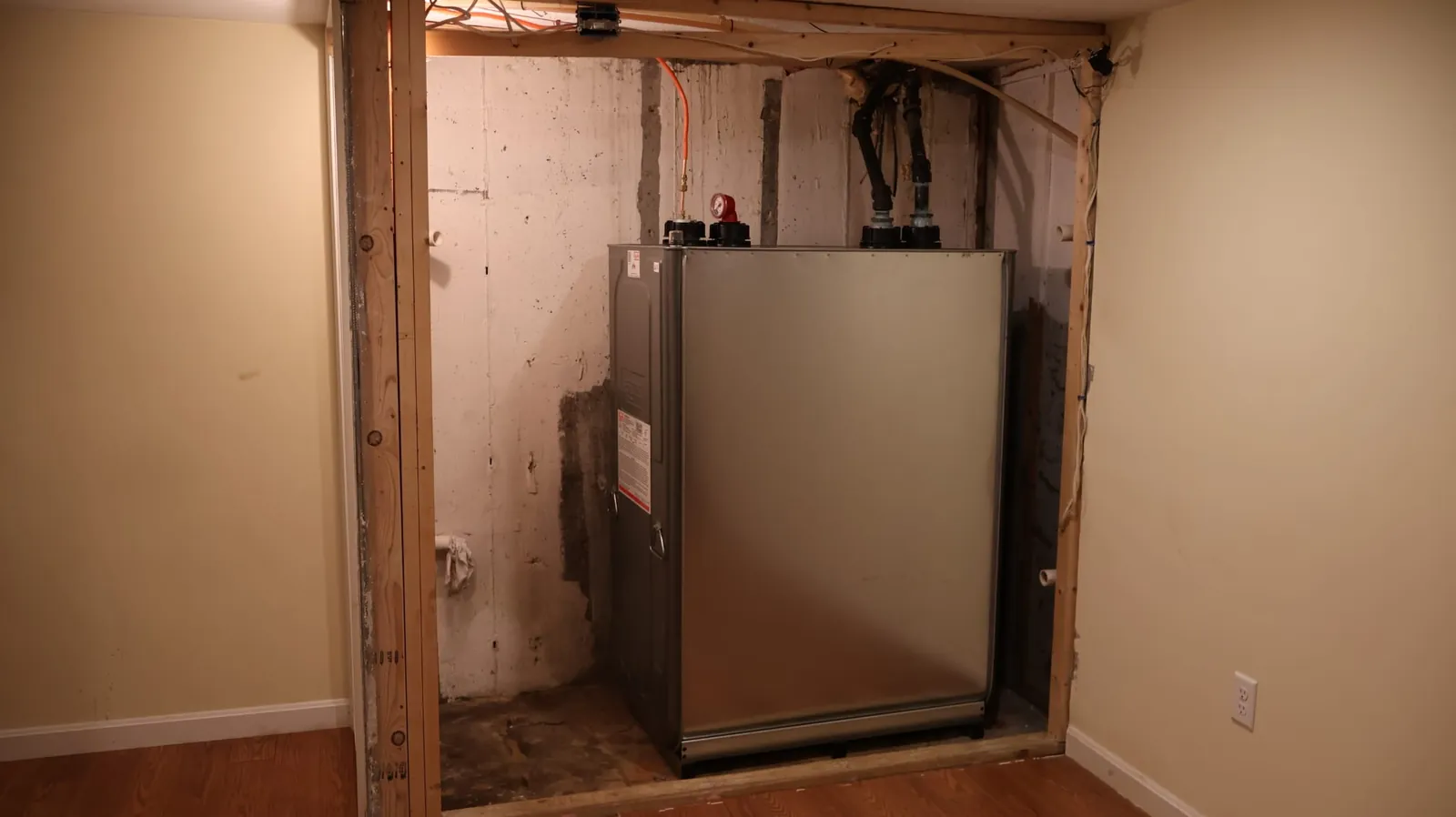
Above Ground Oil Tank Replacement in Massachusetts
An above-ground oil tank sits on legs or a stable base in a basement, a garage or a utility room, and feeds a boiler or furnace. This page covers replacing one, room by room. If your tank is buried, call and tell us, because underground tanks follow different rules.
- Same-day repair
- Free estimates on new systems
- Financing through Wisetack
- Warranty on our labor
Worried about your oil tank? Tell me what you're seeing.

At a glance
- Service area
- New Bedford, Lakeville and the rest of the SouthCoast, plus the South Shore, Cape Cod and Rhode Island
- Based in
- Lakeville, MA. We come to your home or business.
- Phone
- 508-521-9477, answered 24/7
- Specialties
- Replacement of above-ground oil tanks in basements, garages and utility rooms
- Pricing
- Repairs start with a paid diagnostic visit. Replacements get a free written estimate.
What changes with the location of the tank?
The tank is the same in every room, but the job is not.
Basement tanks
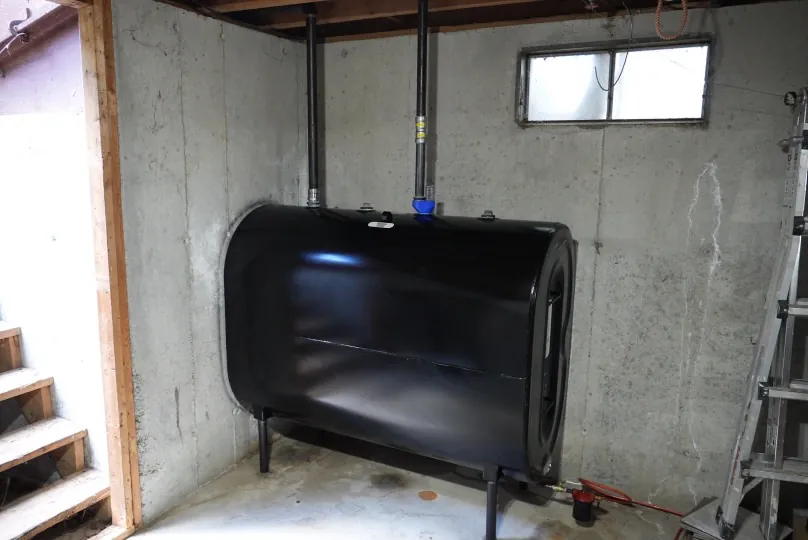
A basement is the most common place for an oil tank in New England. We plan around damp floors, stairs and tight turns, and we confirm the new tank will sit level and supported.
Garage tanks
A garage tank needs a stable base and protection from vehicles. We also look at how the oil line is protected from cold.
Utility room tanks
Utility rooms and closets are often tight. We check the door width and the clearance around the tank before we choose the model.
What is the same in every location
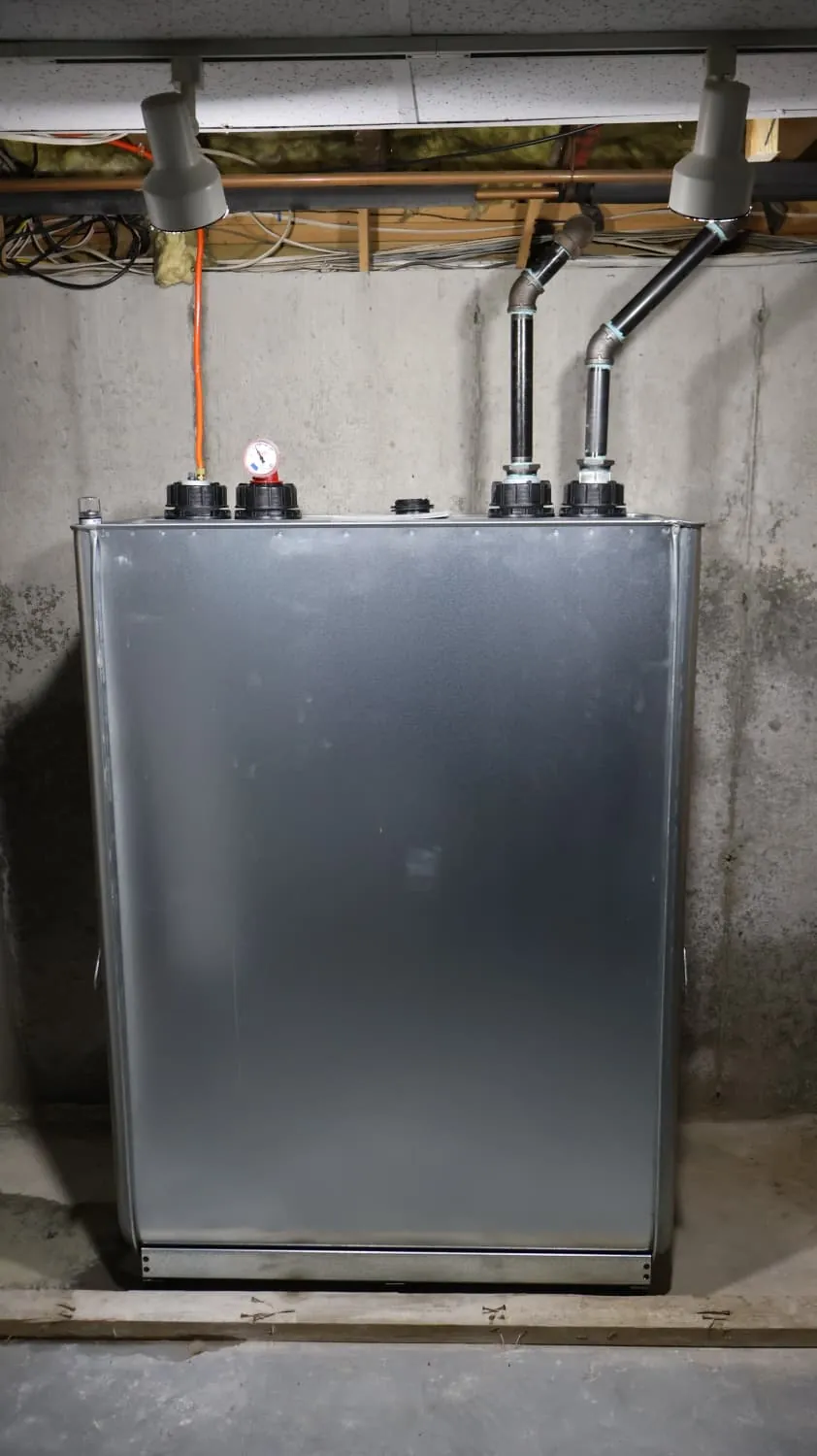
Wherever the tank sits, we check the legs and the base, the oil lines and filter, the vent alarm, the fill and vent pipes and the safety valve. We start the heating system before we leave.
Why indoor tanks still fail
An indoor tank is protected from the weather, but a damp floor and a slow weep can still rust it from the bottom. Indoor tanks are easier to inspect than buried ones, so a yearly look pays off.
What are the signs an above-ground tank needs replacing?
Look for these on the tank and on the floor under it.
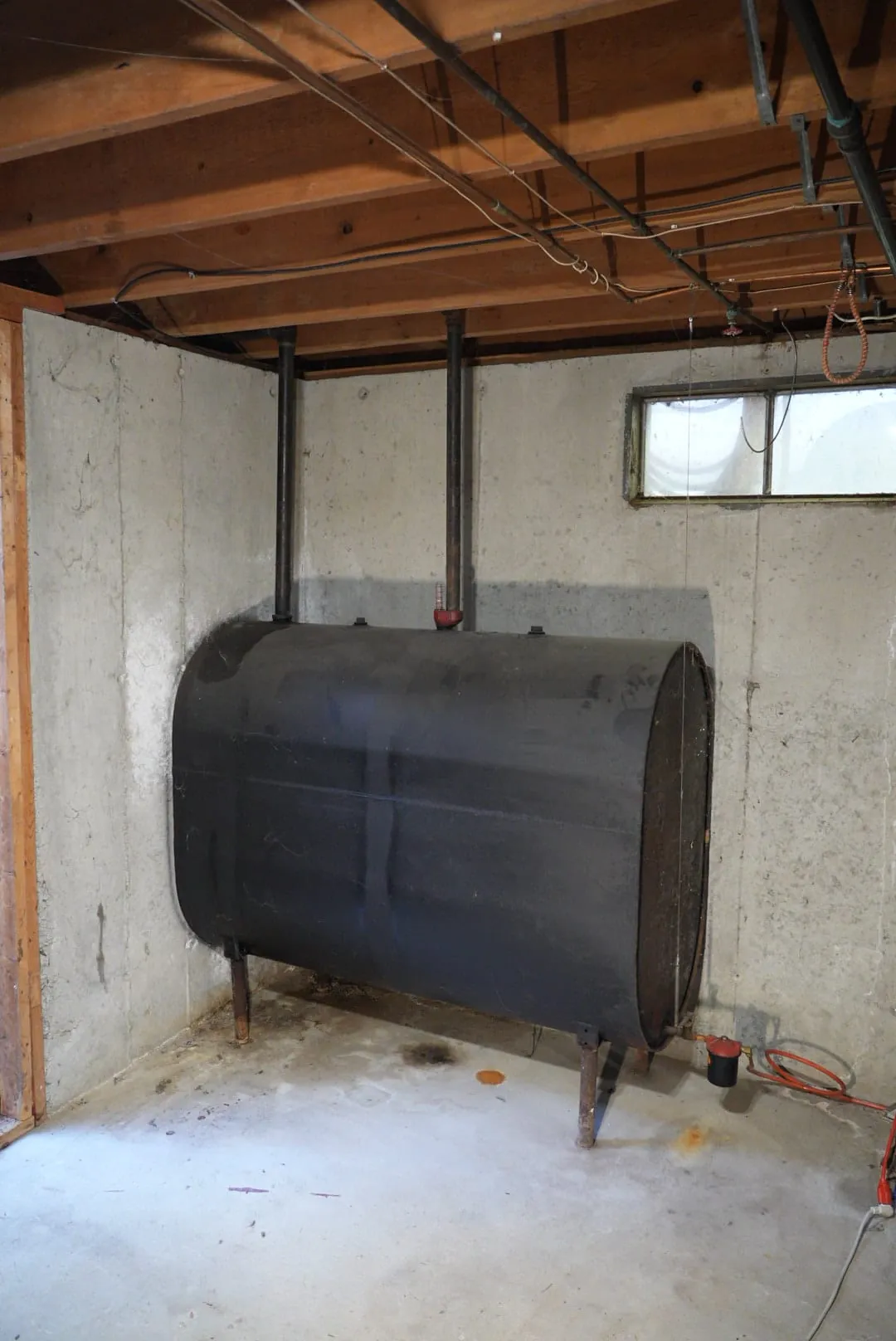
- Rust on the tank body or the legs
- Fuel oil odor in the basement or garage
- Dark staining or a wet spot under the tank
- Seepage or dampness around the fittings
- A tank that looks uneven or bulging
- A tank more than about 20 years old
Replace it now, or plan ahead?
Above-ground tanks are easy to inspect, which gives you time to plan. Seepage is the line between planning and acting.
Plan the replacement when
- The tank is aging but dry underneath
- You see rust on the legs or the lower body
- Winter is coming and you want the job done before it
Act now when
- There is a wet spot, staining or seepage under the tank
- You smell oil in the room
- The tank is bulging or the bottom is soft
For a leak, read emergency oil tank replacement or call 508-521-9477.
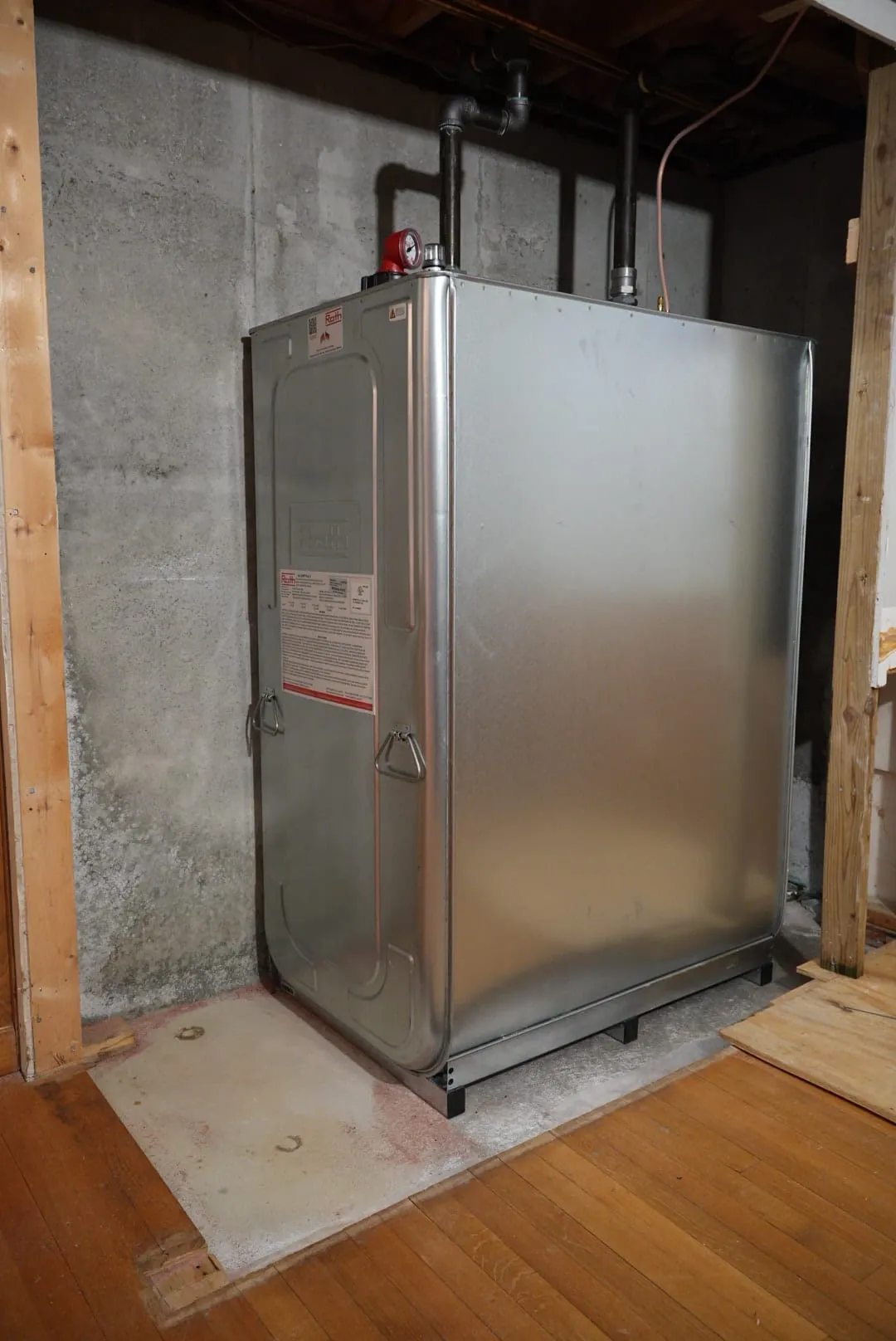
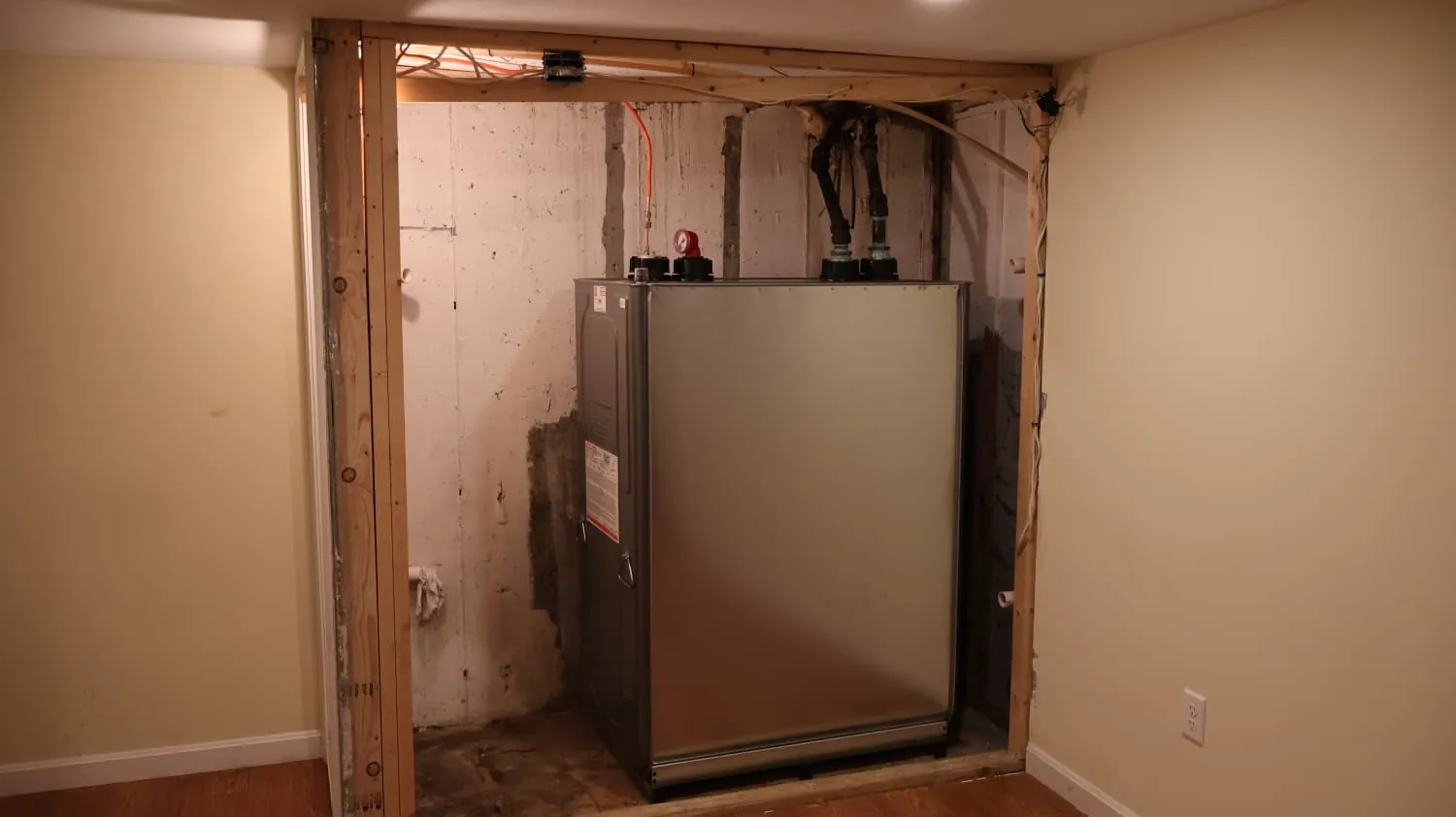
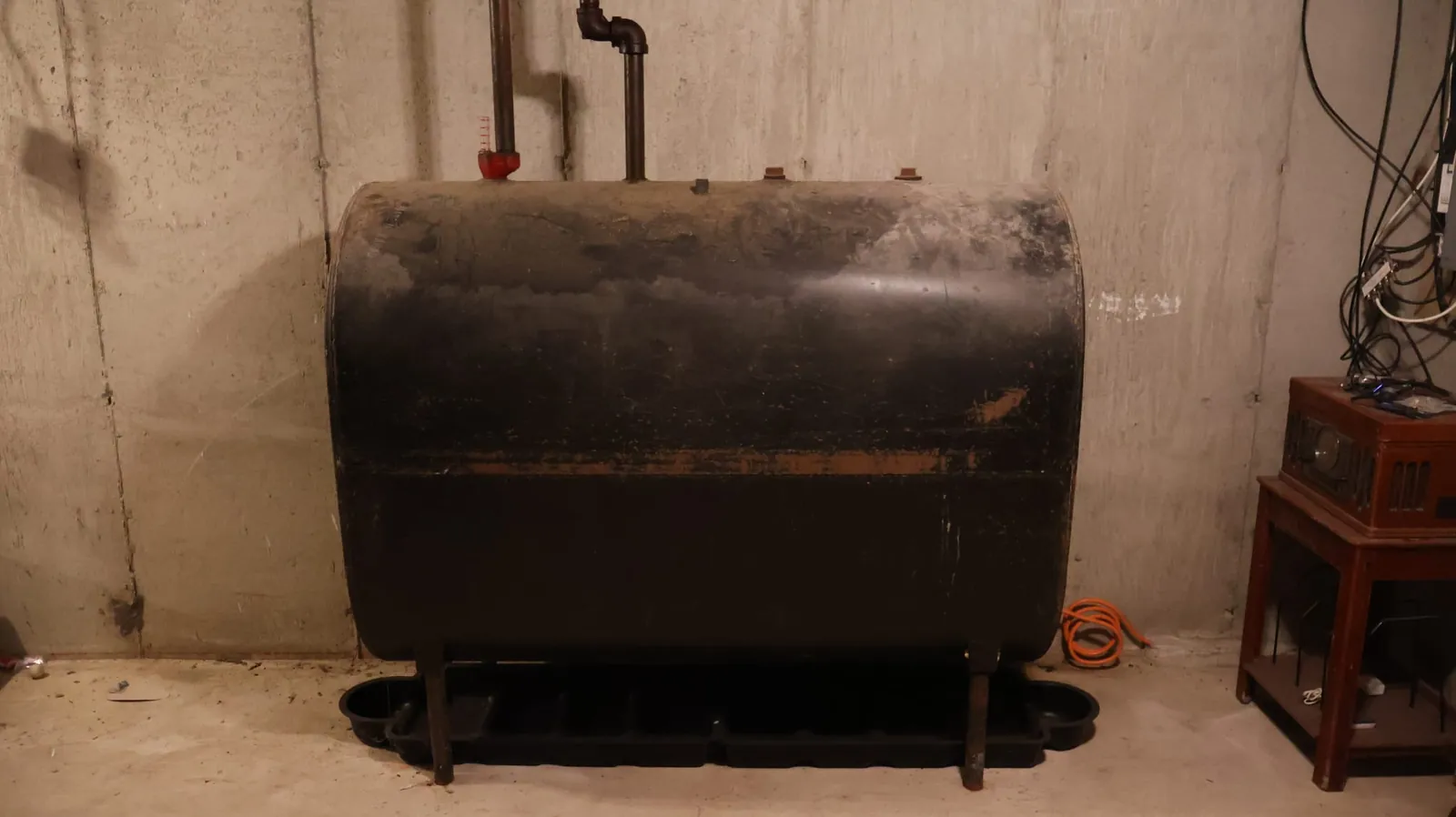
Oil Tanks: job photos
Real jobs, photographed by the technician who did the work.
How does the replacement go, and what does it cost?
Estimate. A replacement starts with a free written estimate after we see the tank and the room. The price depends on the location and the lines, so we do not quote by phone.
What happens on install day.
- We inspect the old tank and its connections
- The oil is handled, the lines are disconnected and the old tank is removed and disposed of
- The new tank is set level and connected to the supply and return lines
- The vent alarm, the fill and vent pipes and the safety valve are checked or replaced
- We restart the boiler or furnace and run the operating checks
What to have ready.
- Where the tank sits and how to reach it
- The age of the tank, or a photo of its label
- A note of any rust, wet spots or smell
- Whether you plan to stay on oil or are thinking about gas
Seeing a leak? Call 508-521-9477 right away and describe what you see. We assess the tank first and explain the replacement and any charges in writing.
Book online. For a replacement you are planning ahead, send the form or call; we confirm your visit by text.

Mass Save Heat Pump Installer Network participating contractor.
Rebates and the 0% HEAT Loan available.
Financing for new systems runs through Wisetack via Housecall Pro, subject to credit approval. Estimates on new systems are free.
Where do you replace above-ground tanks?
We work in Lakeville, New Bedford, Middleborough, Dartmouth, Fall River, Taunton, Wareham, Brockton, Fairhaven, and the rest of the SouthCoast, South Shore, Cape Cod and Rhode Island. See all service areas.
Brands we install · Oil Tanks


Above-ground oil tank questions, answered
What is an above-ground oil tank?
It is a home heating oil tank that stands on legs or a base instead of being buried. Most are in basements, garages or utility rooms.
Is a basement oil tank safe in a damp basement?
A damp basement shortens a steel tank’s life because moisture rusts it from underneath. A dry floor, a level base and a yearly look at the legs and bottom help.
Can the new tank go in the same place as the old one?
Usually, if it fits and the clearances are right. We confirm at the visit, and we tell you if a different spot would be safer or easier to service.
What if my tank is buried?
Call and tell us. Underground tanks follow different rules, and we explain what applies when we hear the details.
Could I switch to gas instead of replacing the tank?
Maybe, if gas runs to your street. Our oil-to-gas conversion page explains what that involves.
Get a free written estimate in New Bedford & the SouthCoast
Call 508-521-9477, answered 24/7, or tap Book ASAP and the office confirms your visit by text.