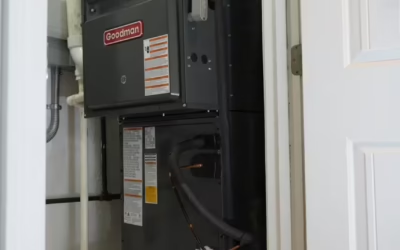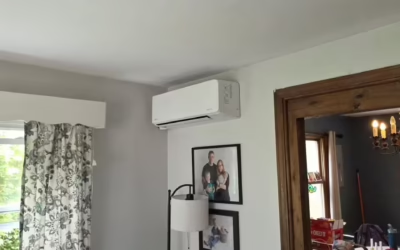
Here’s the short answer: most common AC repairs in 2026 cost $150 to $650, with the national average around $350. Anything involving refrigerant costs noticeably more than it did two years ago — a recharge that used to be a couple hundred dollars can now run $500 or more — and that’s not your contractor padding the bill. A federal phaseout of R-410A refrigerant sent prices up roughly 40 to 60 percent. Below, we’ll break down what every common repair should cost, why “freon” got so expensive, and how to tell when a repair quote is really a sign it’s time to replace.
We’re Armus Mechanical, an HVAC contractor in Lakeville, MA serving the SouthCoast, South Shore, Cape Cod, and Rhode Island. On service calls we keep hearing the same question: “The last guy quoted me $900 to recharge my AC — is that a ripoff?” Sometimes yes. Usually no. Here’s how to tell the difference.
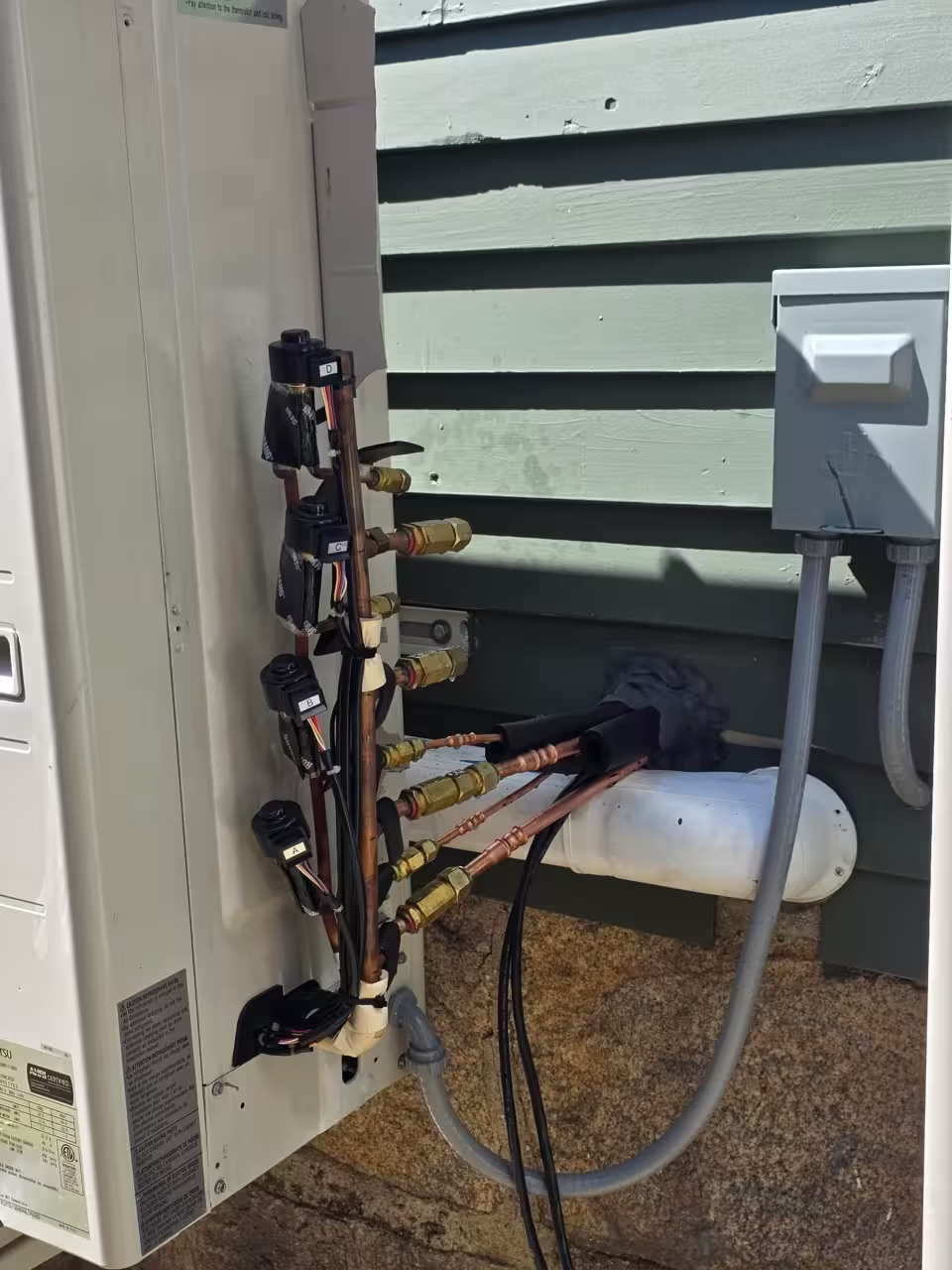
Air conditioner repair costs in 2026: the honest numbers
Every repair starts with a diagnostic visit — typically $75–$200 in our market, often applied toward the repair if you move forward. From there, here’s what the common fixes actually cost in 2026:
| Repair | Typical 2026 cost | How urgent? |
|---|---|---|
| Capacitor replacement | $150 – $400 | Common and cheap — AC won’t start without it |
| Contactor / small electrical | $150 – $400 | Same-day fix in most cases |
| Condenser fan motor | $200 – $700 | Fix fast — a dead fan can overheat the compressor |
| Thermostat replacement | $150 – $500 | Depends on how smart you want it |
| Refrigerant leak repair + recharge | $500 – $1,500 | The big 2026 sticker shock — see below |
| Evaporator coil replacement | $600 – $2,000 | Often a repair-vs-replace decision point |
| Compressor (under warranty) | $600 – $1,200 | You pay labor + refrigerant only |
| Compressor (out of warranty) | $1,800 – $2,800 | Almost always time to talk replacement |
A few things worth knowing about that table:
- Small electrical parts fail the most. Capacitors are the number-one summer breakdown — usually during the first real heat wave — and the cheapest fix on the list.
- Warranty status changes everything on big parts. Compressors and coils often carry 10-year parts warranties — if the system was registered. If you just bought a house in New Bedford or Dartmouth and don’t know, have your contractor check the serial number before approving a big repair. It can cut the price in half.
- Coastal systems die younger. Salt air on the SouthCoast and Cape corrodes condenser coils and electrical connections faster than inland. Within a mile or two of the water, budget for more frequent repairs — and rinse the coil each spring.
AC down and want it handled? Book a visit online in about 30 seconds — no forms, no phone tag.
See Available Times
Or call/text us directly: 508-521-9477
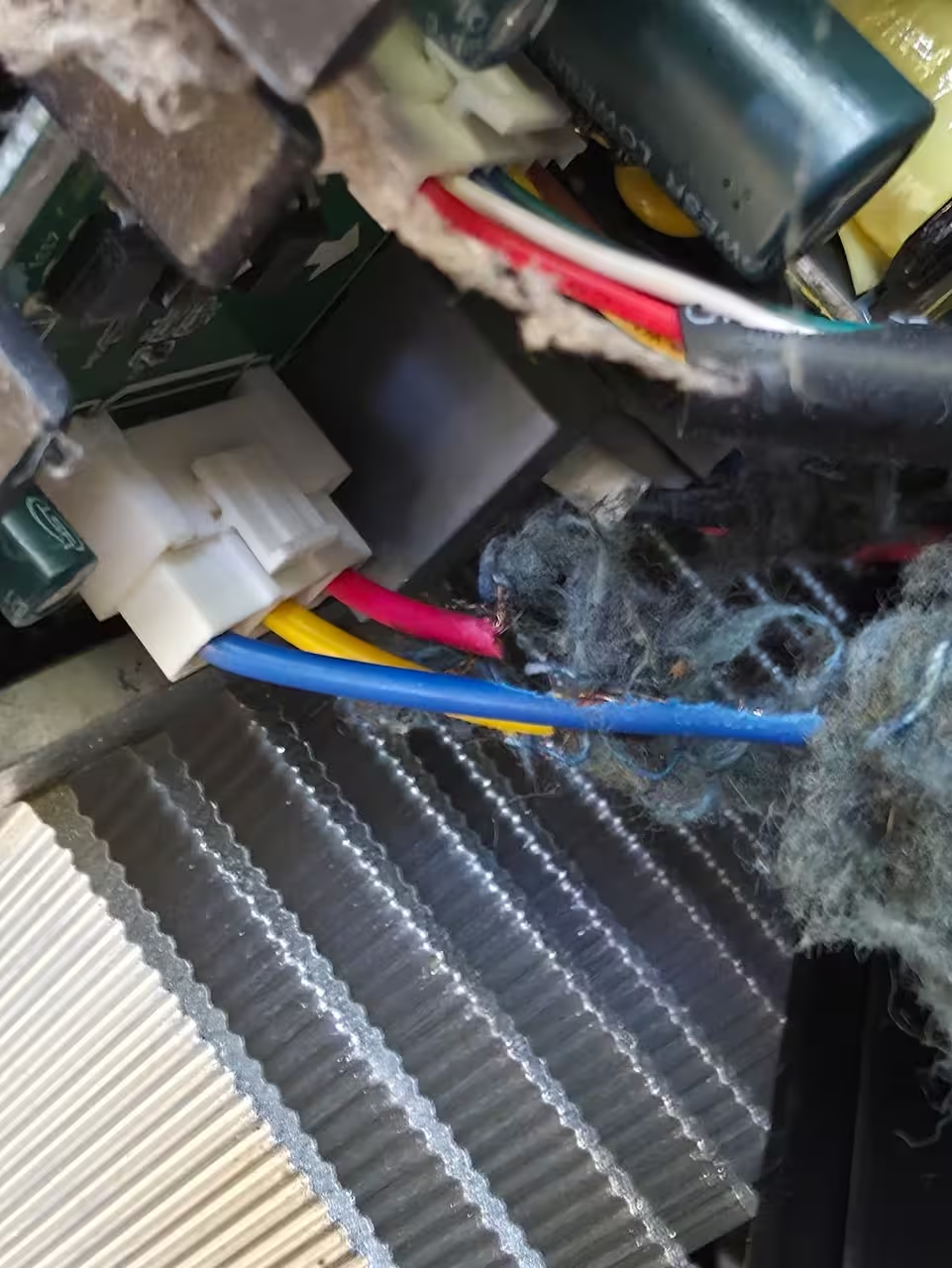
“Freon” in plain English — and why your AC refrigerant quote doubled
First, a quick translation. Freon is technically a brand name for old refrigerants, but everyone uses it to mean the stuff inside the lines — the refrigerant, the working fluid that soaks up heat inside your house and dumps it outside. Two things every homeowner should know:
- Your AC does not “use up” refrigerant. It’s a sealed loop. If your system is low, it leaked. Topping it off without finding the leak is like adding air to a nail-punctured tire — it works until it doesn’t.
- Which refrigerant you have determines what a recharge costs. The data plate on your outdoor unit will say R-22, R-410A, or (on brand-new equipment) R-454B or R-32.
What the AIM Act did to prices
Here’s the controversy behind every high quote you’ve seen this year. Under the federal AIM Act, the EPA is phasing down refrigerants with high global-warming potential:
- R-22 (the old-school freon in pre-2010 systems) stopped being produced in 2020. Recharging one today rarely makes sense — that money is better spent on a new system.
- R-410A — in most home ACs installed roughly 2010–2025 — is now on the same road. New R-410A equipment was banned from manufacture and import as of January 1, 2025, and production of the refrigerant itself keeps stepping down on a federal schedule.
- R-454B and R-32 are the replacements in all new equipment. Better for the climate, but new systems run roughly 5–10% more than comparable R-410A units did, partly due to added safety components.
The result: industry price trackers report R-410A jumped roughly 40–60% after the January 2025 production cut. For a homeowner, that means R-410A now typically bills out at $50–$90 per pound installed — refrigerant, labor, leak check, and recovery bundled together. A system that’s a few pounds low can easily be a $300–$600 recharge before anyone even fixes the leak.
So if your neighbor paid $250 to top off his AC two summers ago and you just got quoted $600 for the same thing — both numbers were fair for their year. The market moved underneath you.
Important: it’s still completely legal to service and recharge an R-410A system, and it will be for years. Nobody should tell you you’re forced to replace. But the economics of repeatedly feeding an expensive, leaky system have changed — which is what the next section is about.
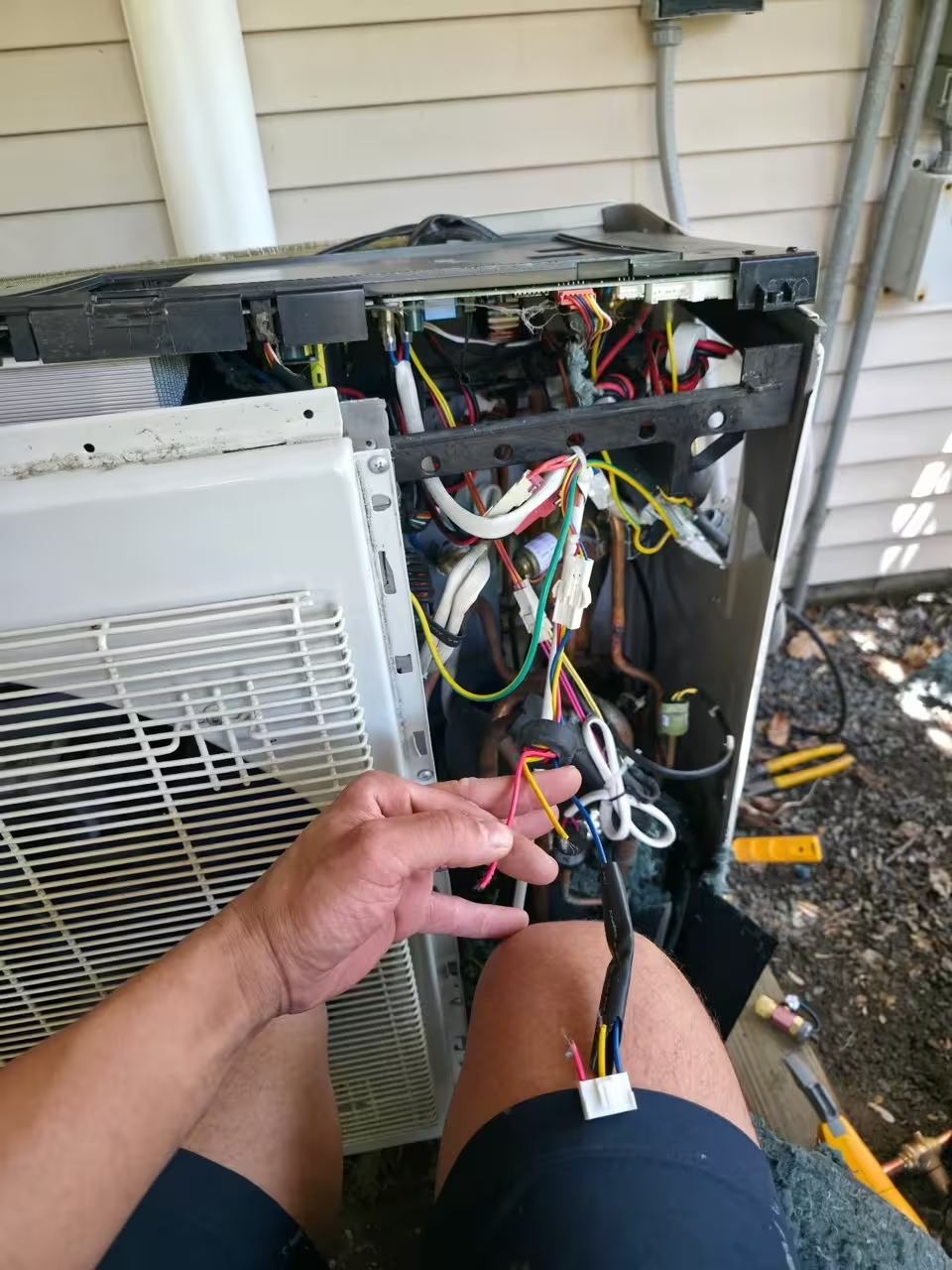
AC not blowing cold air? Run through this before you call
Plenty of “ac not cooling” calls end up being something you could have checked yourself. Save the diagnostic fee — run this list first:
- Thermostat — set to COOL, temperature below room temp, fresh batteries.
- Air filter — a clogged filter chokes airflow and can freeze the indoor coil into a block of ice. If it looks like a lint trap, swap it, run fan-only for a few hours to thaw, then retry.
- Breakers — check the panel, plus the outdoor disconnect box next to the condenser.
- The outdoor unit — is the fan spinning? A unit that hums but won’t start is the classic failed-capacitor symptom ($150–$400 — cheap, as repairs go).
- Ice on the copper lines — ice anywhere means shut it down and call. Running it makes things worse.
If the system runs but the air just isn’t cold, or it short-cycles on and off, that points toward a refrigerant leak or a failing component — genuinely a pro visit. Running an AC low on refrigerant slowly cooks the compressor, and the table above shows what an out-of-warranty compressor costs.
Repair or replace? The 2026 cheat sheet
This is the question the refrigerant transition really changed. Here’s the honest framework we use on real calls in Lakeville, Dartmouth, New Bedford, and across the SouthCoast:
Lean REPAIR when:
- The system is under ~10 years old and this is its first major issue
- The fix is a capacitor, contactor, fan motor, or thermostat — the cheap tier
- Big parts are still under manufacturer warranty
- The refrigerant circuit has never leaked before
Lean REPLACE when:
- The system is 12–15+ years old — you’re in bonus-time territory
- It’s an R-22 system. Full stop. Don’t put another dollar into it.
- The quote is a compressor or evaporator coil out of warranty — $1,800–$2,800 to extend the life of a machine built around a phasing-out refrigerant
- It’s the second refrigerant leak. One might be bad luck; two means the coils are corroding (common near the coast)
- Gut check: if the repair costs more than $50 × the system’s age in years, replacement usually wins
The 2026 twist that works in your favor: if you replace, you don’t have to replace with another straight AC. In Massachusetts, Mass Save’s 2026 program pays $2,650 per ton, capped at $8,500 for a qualifying whole-home heat pump — and up to $16,000 for income-eligible households. Rhode Island’s Clean Heat RI program covers 60% of a heat pump project up to $11,500 (100% up to $18,000 for income-eligible households) while funding lasts. A heat pump cools exactly like a central AC in summer and heats in winter, which matters a lot around here if you’re feeding an old oil boiler every January. (Heads-up on the federal side: the 25C tax credit that used to knock up to $2,000 off heat pumps expired December 31, 2025 — the state programs are now the main money on the table.)
If your ductwork is rough or nonexistent — plenty of older SouthCoast capes and multi-families never had ducts — ductless mini-splits qualify for the same rebates. We break down that decision in Mini Split AC vs Central Air: Which Is Right for You? and the money side in our mini-split installation cost guide.
One more thing: rebate programs are dropping R-410A equipment from their qualified lists, so any new system you buy should use R-454B or R-32. A suspiciously cheap “new” R-410A unit in 2026 is closeout inventory — the discount today can cost you on every future service call.
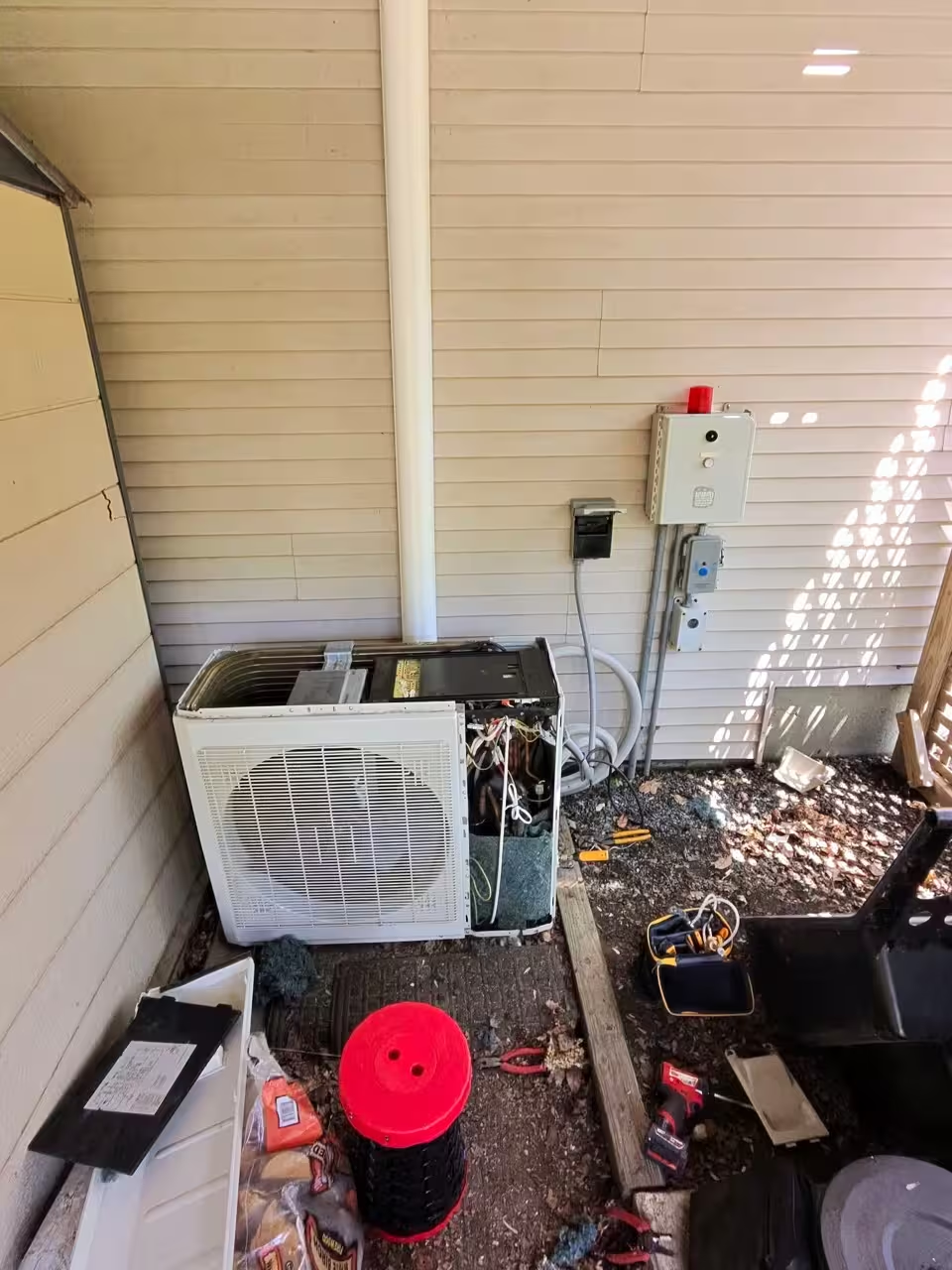
How to tell a fair AC repair quote from a bad one
- A fair quote itemizes — part, labor, refrigerant by the pound. “It’s $1,200” with no breakdown deserves questions.
- Refrigerant should come with a leak diagnosis. Anyone happy to just “top it off” every June is selling you the same expensive pound of R-410A on repeat.
- Warranty check comes before the big-ticket quote. If nobody looked up your serial number before quoting a $2,500 compressor, get a second opinion.
- “You legally have to replace it” is false. The phaseout applies to new equipment manufacturing, not to servicing your existing system.
- Pressure expires; math doesn’t. A real recommendation survives you sleeping on it overnight.
The same logic applies on the heating side — we wrote the winter version of this exact guide in Furnace Repair Cost 2026: What’s Fair, What’s Gouging, worth a bookmark before your heating system pulls the same move in January.
FAQ: AC repair, freon, and refrigerant questions we hear every week
Why is my AC not blowing cold air?
The usual suspects, in order: clogged filter, tripped breaker, failed capacitor, frozen evaporator coil, or low refrigerant from a leak. Check the filter and breakers first (see the checklist above). If the outdoor unit hums but won’t start, or it runs but isn’t cold, book a diagnostic — limping along on low refrigerant is how compressors die.
How much does an AC recharge cost in 2026?
With R-410A billing at $50–$90 per pound installed, a typical home recharge lands between $200 and $600, and a recharge plus leak search and repair commonly runs $500–$1,500. That’s the market since the AIM Act production cuts — not one contractor’s markup. A recharge without a leak repair is a rental, not a fix.
What’s the difference between freon and refrigerant?
Freon is a brand name that stuck, like Kleenex. Refrigerant is the real term for the fluid in your AC’s sealed loop. Most systems installed 2010–2025 use R-410A; new equipment uses R-454B or R-32. Whatever your data plate says, the rule is the same: low refrigerant means a leak, because the system never consumes it.
Can I still get freon for my AC?
If it’s an R-410A system — yes, legally and for years to come, just at higher prices as supply tightens. If it’s an old R-22 system, that refrigerant hasn’t been made since 2020, and recharging it is throwing good money after bad. When in doubt, text us a photo of the outdoor unit’s data plate: 508-521-9477.
How much does air conditioner repair cost on average?
Around $350 nationally in 2026, with most common fixes falling between $150 and $650. Electrical parts sit at the bottom of the range, motors in the middle, and refrigerant work, coils, and compressors at the top. The full breakdown is in the table near the top of this page.
Why is AC refrigerant so expensive now?
The federal AIM Act is phasing down high-global-warming refrigerants on a fixed schedule. New R-410A equipment was banned from manufacture in January 2025, production keeps shrinking, and prices climbed roughly 40–60% as a result. Every contractor in Massachusetts and Rhode Island pays more per cylinder — the difference is whether they explain it or just hand you the bill.
Bottom line
AC repair in 2026 isn’t more expensive because contractors got greedy — the refrigerant your system runs on is being phased out underneath it. Fair numbers to anchor on: $150–$650 for common repairs, $50–$90 per pound for R-410A, and a hard conversation about replacement once you’re staring at an out-of-warranty compressor or a second leak on a 12-year-old system. If you do replace, Mass Save and Clean Heat RI rebates make 2026 a genuinely good year to step up to a heat pump instead of another plain AC.
If your AC is down anywhere on the SouthCoast, South Shore, Cape Cod, or Rhode Island — Lakeville to Fall River — we’ll give you the diagnosis straight, itemize the quote, and tell you honestly whether repair or replacement is the smarter money.
Armus Mechanical LLC · 143 Main St, Lakeville, MA 02347
See Available Times
Prefer to talk to a human? 508-521-9477