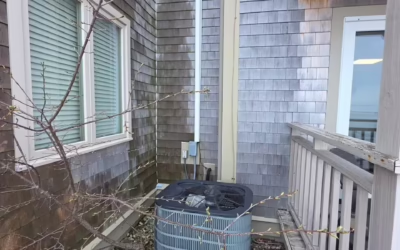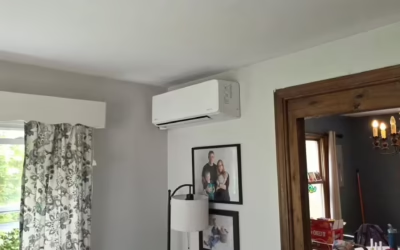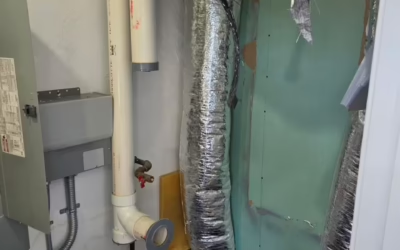
Here’s the short answer: most furnace repairs in 2026 should cost $150 to $600. Small parts — a flame sensor, an ignitor, a thermocouple — usually run $100 to $400. Big-ticket work like a cracked heat exchanger can legitimately hit $1,000 to $3,000+. The diagnostic visit itself should be about $100 to $200, quoted up front.
If your quote is way outside those lines and nobody can explain why, you’re right to push back. But here’s the twist in 2026: a lot of “outrageous” quotes aren’t repair quotes at all — they’re replacement quotes, and replacement prices really have jumped. Let’s separate what’s fair, what’s inflation, and what’s gouging.
Why every furnace quote feels higher in 2026
Three things hit the HVAC industry at once, and homeowners are feeling all of them.
Tariffs. Layered tariffs on steel, aluminum, and imported components have pushed HVAC equipment prices up roughly 15–30% since mid-2025. Major manufacturers announced price increases of around 10% on new residential equipment, and those costs flow straight into replacement quotes.
The refrigerant transition. Under the AIM Act, manufacturers stopped building new residential equipment with R-410A refrigerant as of January 1, 2025. The new A2L refrigerants (R-454B, R-32) required redesigned equipment, and R-454B itself went through a genuine supply crunch in 2025 — one major producer added a 42% surcharge at the peak. This mostly affects air conditioners and heat pumps rather than the furnace itself, but since furnaces and ACs are often quoted together, it inflates the package price. (We broke down the cooling side in AC Repair Cost 2026: Why Quotes Are So High Right Now.)
The federal tax credit died. The 25C Energy Efficient Home Improvement Credit — up to 30% of project cost, worth as much as $2,000 on qualifying equipment — expired December 31, 2025. Equipment installed in 2026 gets no federal credit. That $2,000 cushion is simply gone from every replacement math problem.
Put those together and you get the 2026 controversy: replacement got expensive enough that repairing an older furnace suddenly looks smart again — and some contractors are leaning on that confusion to pad repair invoices. Numbers are your defense.
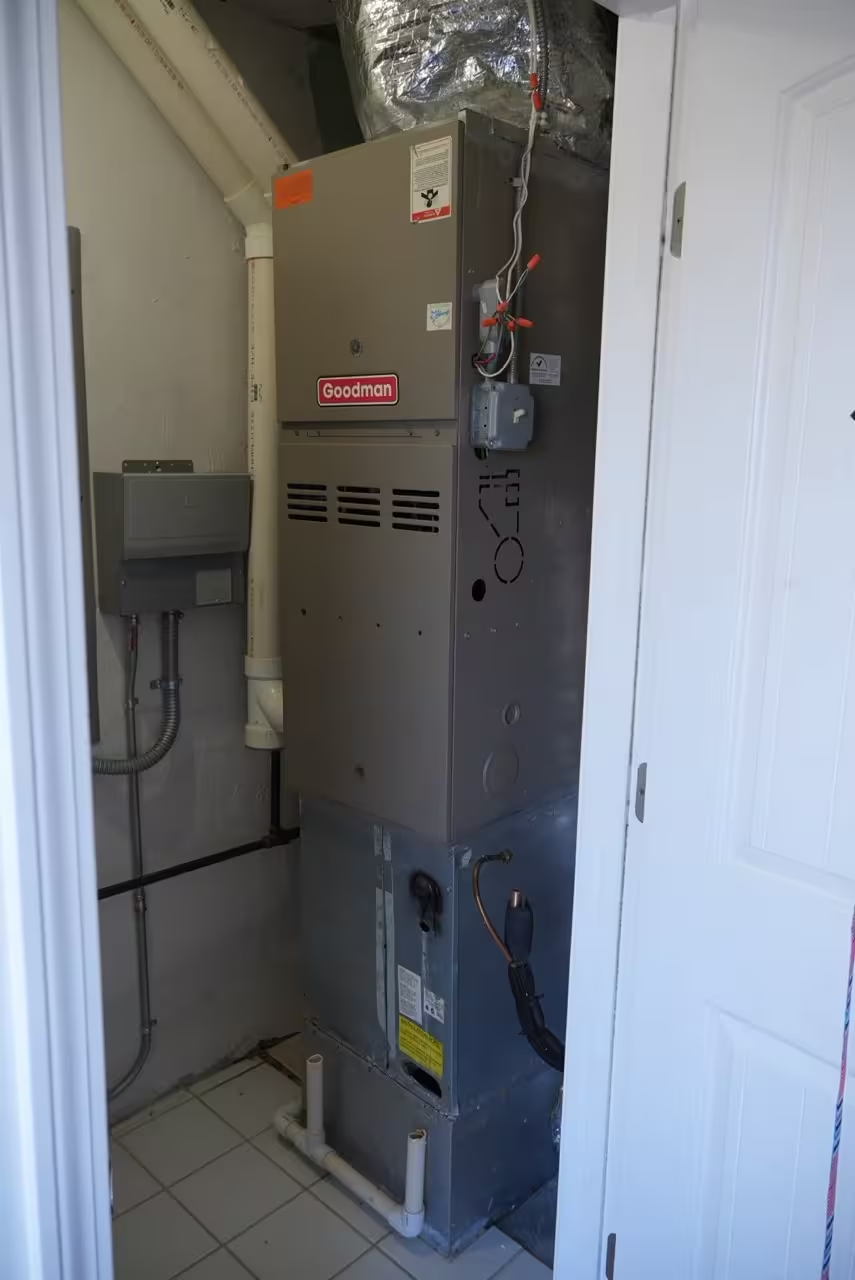
What furnace repair should cost in 2026
These are typical market ranges for southeastern Massachusetts and Rhode Island — parts plus labor, non-emergency hours.
| Repair | Fair 2026 range | Gouging red flag |
|---|---|---|
| Diagnostic / service call | $100 – $200 | Fee not disclosed before the visit |
| Flame sensor, ignitor, thermocouple | $100 – $400 | $600+ for a 30-minute part swap |
| Limit switch, pressure switch | $150 – $500 | Bundled with “mandatory” extras |
| Blower motor, control board, gas valve | $400 – $1,500 (typical) | Quote with no part number or model |
| Cracked heat exchanger | $1,000 – $3,000+ | Condemned furnace with no CO reading or photo shown |
| Emergency / after-hours repair | $300 – $1,200 | Emergency rate applied to a Tuesday-afternoon call |
| Oil burner tune-up / service | $150 – $500 | “Tune-up” that’s really a sales visit |
A fair invoice names the part, the model, and the labor. A padded one says “repair kit” and a round number.
Gas furnace repairs
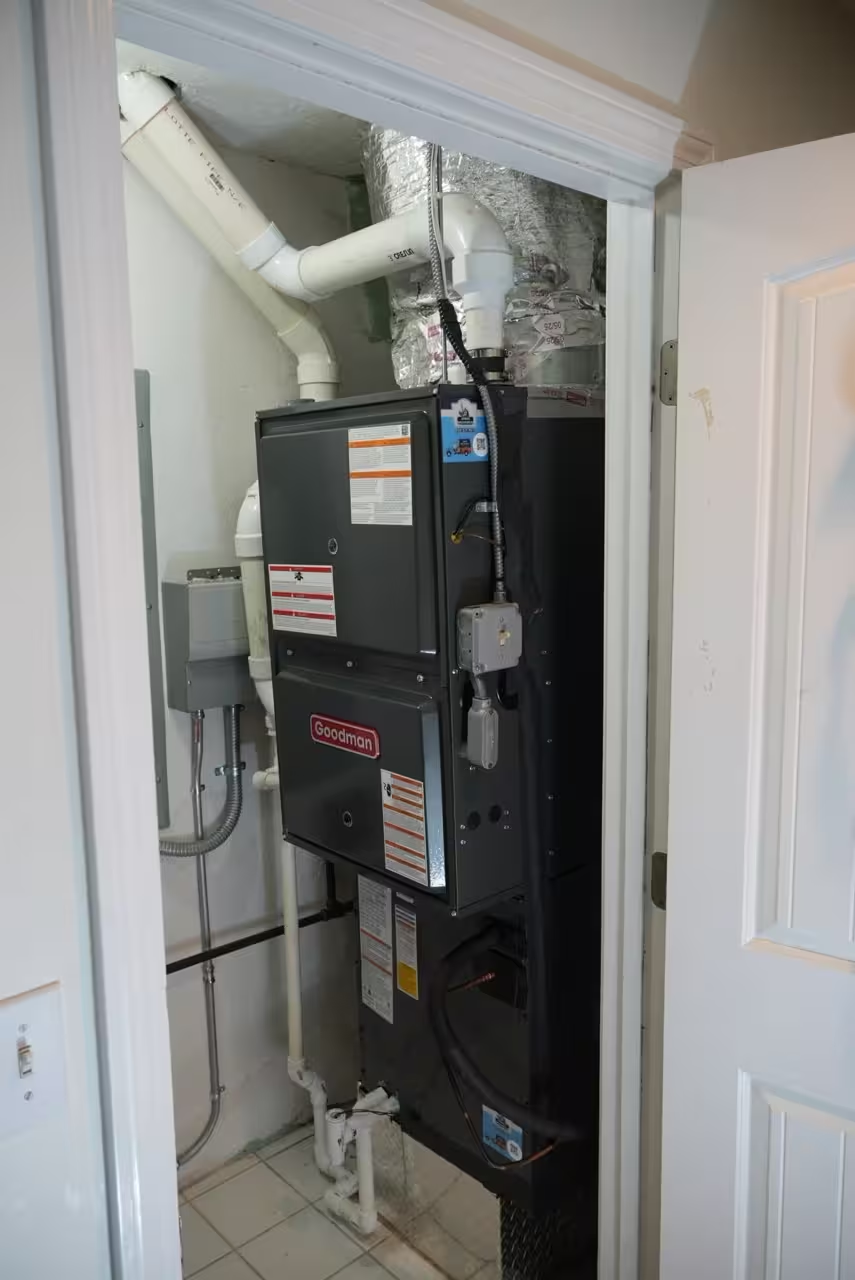
Gas furnace problems cluster around ignition (flame sensors and ignitors are the classics — cheap parts, quick labor) and airflow (blower motors, capacitors). The one diagnosis that deserves healthy skepticism is the cracked heat exchanger. It’s a real and dangerous failure — it can leak carbon monoxide — but it’s also the industry’s most abused replacement trigger. Before you accept a condemned furnace, ask to see the crack on a camera or get the CO measurement. A reputable tech will show you without being asked twice.
Oil furnace and oil burner repairs
Here’s the part national cost guides skip: a huge share of homes across the SouthCoast still heat with oil. The triple-deckers in Fall River and the older housing stock around New Bedford were built long before natural gas lines reached every street, and plenty never converted.
A typical oil furnace repair runs $350–$950. An annual oil burner service — new nozzle, new fuel filter, cleaned heat exchanger, adjusted electrodes — runs about $150–$500 and prevents the majority of no-heat calls we see in January. If you’re on oil, that yearly service is the single best money you’ll spend; our easy guide to oil burners and furnace maintenance walks through exactly what should be on the checklist. And if your oil tank is original to the house, factor its age into any repair-vs-replace decision — oil tank replacement is its own line item, and a failing tank can force your hand faster than a failing burner.
Boiler repairs
Steam and hot-water boilers heat a big chunk of older New England homes, and they’re generally worth fixing: boiler repairs typically run $150–$750, and a well-maintained cast-iron boiler can outlast two furnaces. Circulator pumps, zone valves, aquastats, and expansion tanks are the usual suspects. Where quotes go sideways is when a repairable boiler gets quoted as a full boiler replacement without a clear reason — replacement is sometimes right, but “it’s old” isn’t a diagnosis.
Not sure if your quote is fair? Book a second opinion — the diagnostic fee is quoted up front, and we’ll tell you if the first quote was right.
Repair or replace? The 2026 math
The question behind every big repair quote is really about furnace replacement cost. Here’s where the market sits in 2026:
| Replacement | Typical 2026 installed cost |
|---|---|
| Standard-efficiency gas furnace (80–89% AFUE) | $3,800 – $6,200 |
| Mid-efficiency gas furnace (90–95% AFUE) | $5,200 – $8,800 |
| High-efficiency gas furnace (96%+ AFUE) | $7,500 – $12,000 |
| New furnace cost, overall national range | $2,500 – $11,200 (midpoint ~$4,500–$6,300) |
| Oil furnace replacement | $2,500 – $10,000 (~$5,000 average) |
| Oil boiler replacement cost | $4,800 – $9,000 (~$7,500 average) |
So when a contractor says your $1,800 heat-exchanger repair “doesn’t make sense on a 22-year-old furnace,” they may be doing honest math — the cost to replace a furnace is real money, but so is sinking a third of it into a machine on borrowed time. The details of what drives an install price up or down (venting, ductwork, permits, old-equipment removal) are covered on our furnace installation and replacement page.
Two rules of thumb the industry actually uses:
- The 50% rule: if the repair costs more than half the price of a comparable new furnace, replace.
- The $5,000 rule: multiply the furnace’s age by the repair cost. Over $5,000, lean replace. (A $500 repair on an 8-year-old furnace = $4,000 — repair it. The same $500 on a 15-year-old = $7,500 — start pricing replacements.)
How to spot gouging: a 60-second checklist
- No diagnostic fee quoted before the visit. Fair shops tell you the number when you book.
- A “condemned” furnace with no evidence. Ask for the CO reading or a photo of the crack.
- Round-number quotes with no part names. “Blower assembly repair — $1,400” should become a part number and a labor line when you ask.
- Emergency pricing on a non-emergency call. After-hours rates ($300–$1,200 territory) belong on nights, weekends, and no-heat-with-a-newborn situations — not a scheduled Tuesday visit.
- Pressure to decide today. Real prices survive a 24-hour think. “This price is only good right now” is a sales tactic, not a market condition.
- A replacement pitch with no repair option. Even when replacement is the right call, you deserve both numbers.
One honest caveat in the other direction: 2026 prices genuinely are higher than the blog posts you read in 2023. A quote that’s 20% above an old internet number isn’t gouging — it’s tariffs. Use current ranges, like the ones above.
The New England wrinkle: rebates push replacement — but not toward a furnace
If you’re in Massachusetts and your furnace is near the end, know where the incentive money actually is in 2026. Mass Save pays nothing toward furnace repair or a like-for-like gas furnace swap. Its 2026 rebates target heat pump conversions: $2,650 per ton (capped at $8,500) for whole-home heat pump systems, $1,125 per ton (up to $8,500) for partial-home installs, and up to $16,000 for income-qualified households — plus the 0% HEAT Loan for financing. Rhode Island Energy runs its own heat pump incentive programs on the RI side of our service area.
That changes the replacement math. A high-efficiency gas furnace at $7,500–$12,000 with zero rebate versus a cold-climate heat pump system with up to $8,500 back is a comparison worth running before you sign anything — especially on oil heat, where fuel costs sting most. If you’re new to the technology, start with our plain-English explainer, What Is a Heat Pump?, then get real quotes for both paths. And whatever you choose, keep the old furnace running safely in the meantime with proper heating service — a $200 fix that buys you a spring installation beats a panicked January replacement at full winter pricing.
FAQ: furnace repair cost questions we hear every week
How much does furnace repair cost in 2026?
Most repairs land between $150 and $600, with the national average around $350–$400. Minor parts (flame sensor, ignitor) run $100–$400; major work like a heat exchanger runs $1,000–$3,000+. The diagnostic visit should be roughly $100–$200, quoted before anyone shows up.
Why are gas furnace quotes so high in 2026?
Equipment prices rose roughly 15–30% since mid-2025 from tariffs and the A2L refrigerant transition, and the federal 25C tax credit (worth up to $2,000) expired December 31, 2025. Repairs got modestly more expensive; replacements got a lot more expensive.
How much does an oil furnace repair cost?
Typically $350–$950, with routine annual burner service at $150–$500. On the SouthCoast, where oil heat is everywhere, any repair quote over $1,000 deserves a second opinion — they’re easy to get and honest shops don’t mind.
What’s a fair boiler replacement cost in 2026?
Boiler repairs run $150–$750. Full oil boiler replacement averages about $7,500, most jobs falling between $4,800 and $9,000 installed. Old-house realities — chimney liners, asbestos-wrapped pipe, zone re-piping — can add cost, so demand an itemized quote.
What does a new furnace cost, and when should I replace instead of repair?
The cost to replace a furnace runs $2,500–$11,200 installed in 2026, most standard jobs landing near $4,500–$6,300. Replace when the repair exceeds half of that, when age × repair cost tops $5,000, or when the heat exchanger fails on a 15+ year-old unit. Otherwise, repair.
Does Mass Save help with furnace repair?
No. Mass Save doesn’t rebate repairs or standard furnace swaps. In 2026 its rebates go to heat pump conversions — up to $8,500 for most households, up to $16,000 income-qualified. If replacement is on the table anyway, price a heat pump alongside the furnace before deciding.
The bottom line
A furnace repair in 2026 should usually cost $150–$600, oil-side repairs $350–$950, boiler repairs $150–$750 — and anything beyond those ranges should come with a part number, a photo, and a straight answer. Replacement quotes really are higher this year (tariffs, refrigerant transition, no more federal credit), which makes a fair repair on a mid-life furnace smarter than it’s been in a decade. If the furnace is 15+ years old, run the replacement math — and check the heat pump rebates before you buy another fossil-fuel appliance.
We’re Armus Mechanical, based at 143 Main St in Lakeville, serving the SouthCoast, South Shore, Cape Cod, and Rhode Island. We quote the diagnostic fee up front, show you the failed part, and give you the repair price and the replacement price so the decision is yours.