Hydronic Radiant Heating Repair & Installation
In a hydronic radiant system, a boiler heats water and a pump sends it through tubing in the floor. The floor warms and gives off heat into the room, so there is no blowing air and no vents. Armus Mechanical, based in Lakeville, installs, repairs and maintains these systems across New Bedford and the SouthCoast.
- Same-day repair
- Free estimates on new systems
- Financing through Wisetack
- Warranty on our labor
Boiler banging, leaking or not firing? Tell me what's going on.

At a glance
- Service area
- New Bedford, Lakeville and the rest of the SouthCoast, plus the South Shore, Cape Cod and Rhode Island
- Based in
- Lakeville, MA. We come to your home or business.
- Phone
- 508-521-9477, answered 24/7
- Specialties
- Boiler-fed hydronic radiant floors: installation, repair and maintenance of boilers, pumps, zone valves, manifolds, mixing valves and controls
- Pricing
- Repairs start with a paid diagnostic visit. Replacements get a free written estimate.
What is hydronic heating?
Hydronic heating moves heat with hot water instead of air. A boiler heats the water, and a pump sends it through pipes to radiators, baseboard or tubing in the floor, so there are no ducts and no blowing air.
Hydronic radiant heating is the floor version of the same idea, with the tubing in or under the floor, and a mixing valve lets it run off the same boiler that feeds radiators or baseboard. We install, repair and maintain these systems, and our boiler repair and installation page covers the boiler side.
What parts of a hydronic radiant system do you repair?
We repair every part of the loop between the boiler and the floor.
Boiler or heat source
The boiler makes the heat and sets the water temperature the floors can use. We repair and tune gas and oil boilers; see boiler repair and installation.
Circulator pumps
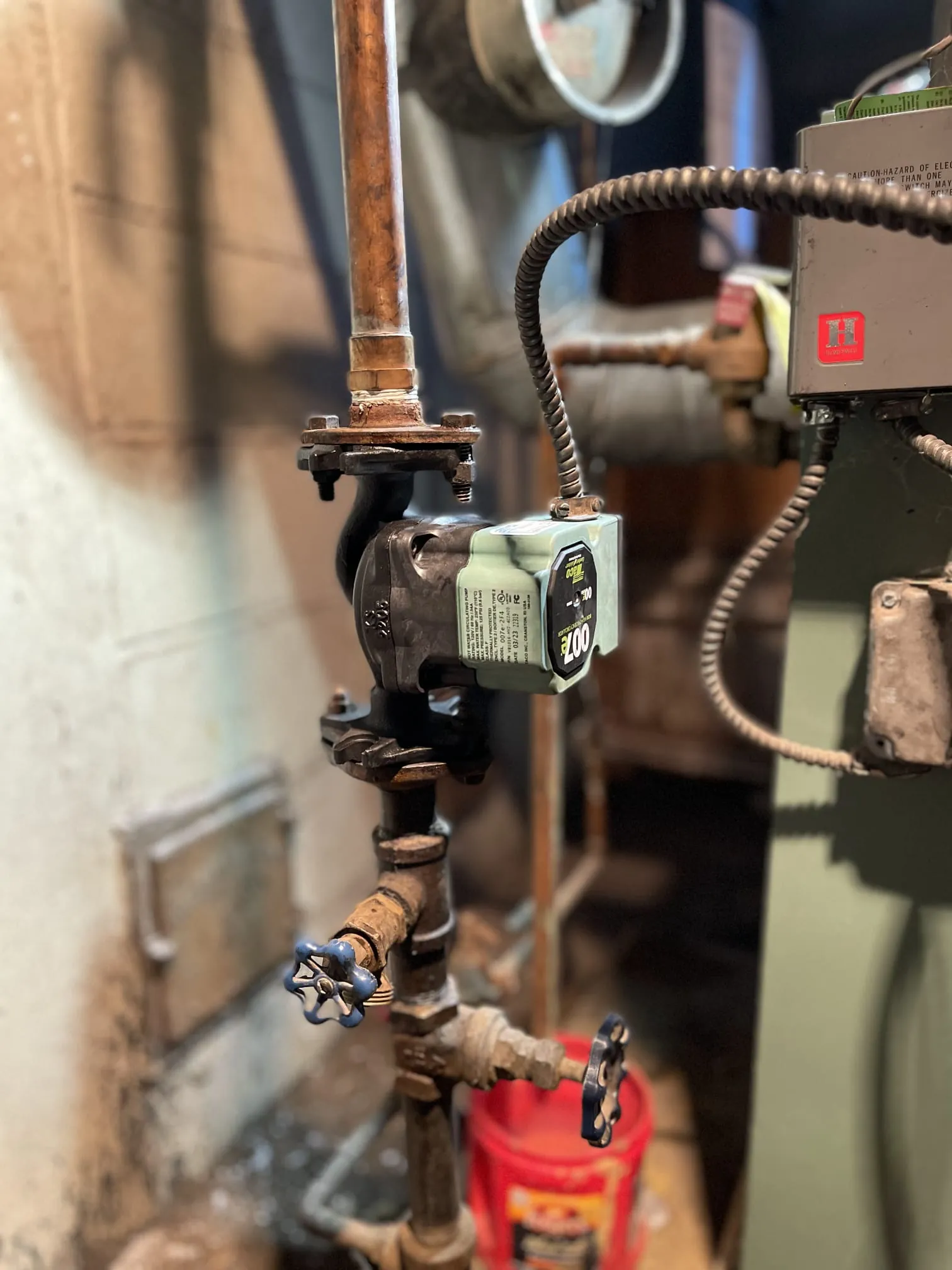
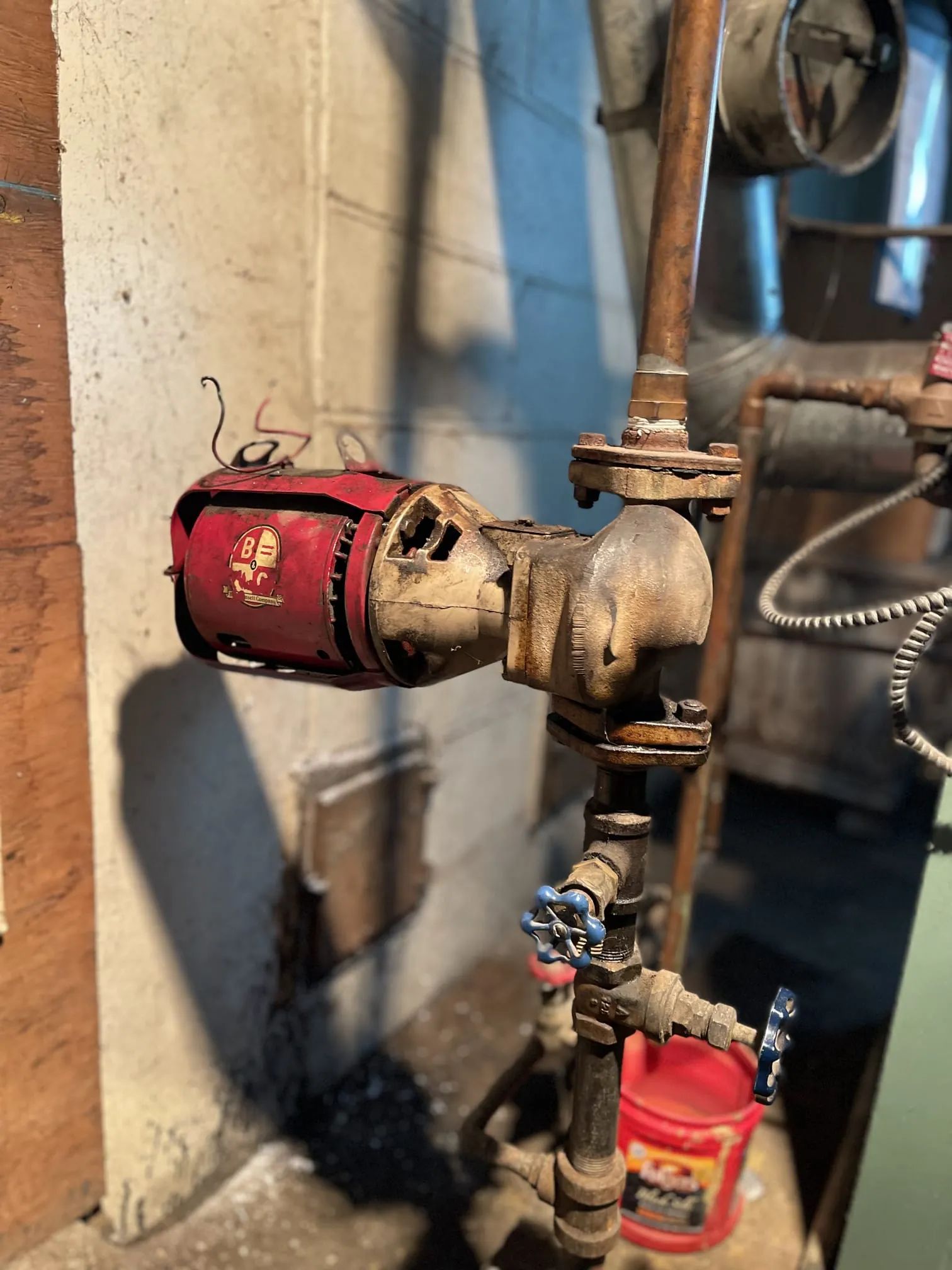
A pump moves the water through each loop, and a worn pump leaves floors cold while the boiler runs. We test the motor and impeller and replace the pump with a properly sized one.
Zone valves and actuators
Zone valves open and close each zone when its thermostat calls for heat. When a valve sticks or its motor burns out, that zone stays cold or overheats, and we replace the failed part.
Manifolds and balancing valves
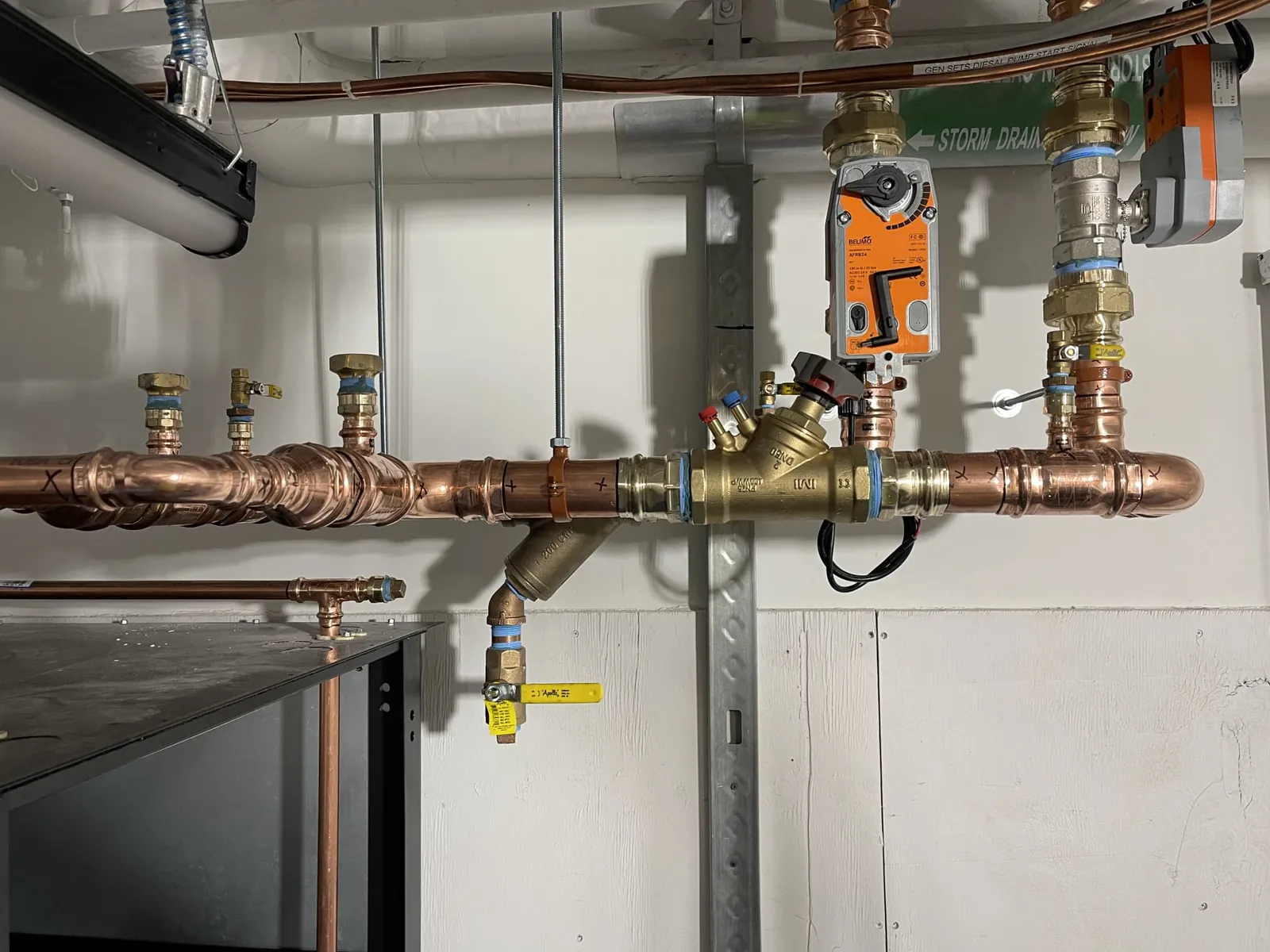
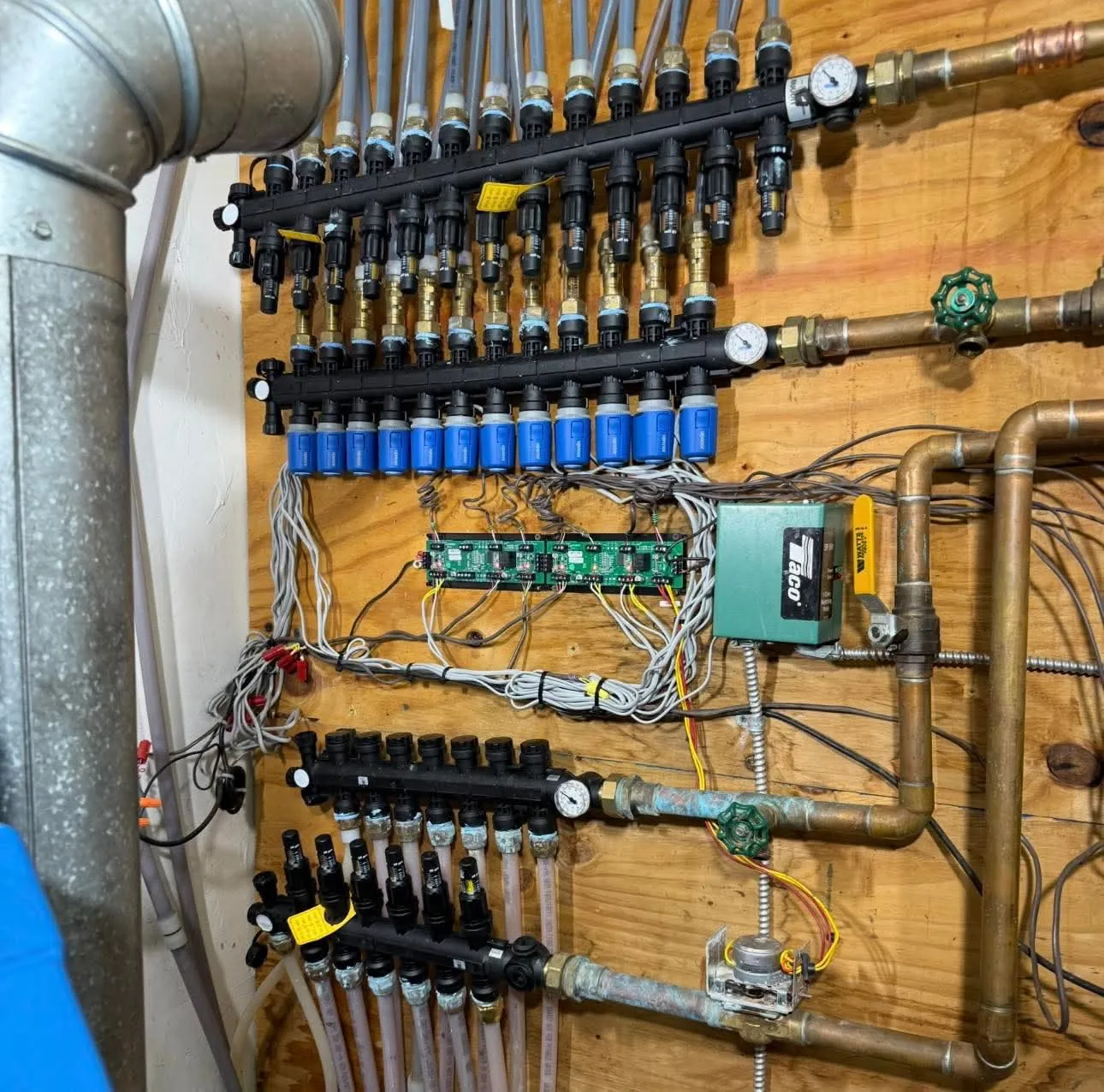
The manifold feeds each tubing loop and balances the flow between them. We clean, balance, repair or replace manifolds, and one recent job replaced a whole manifold assembly.
Mixing valves and temperature controls
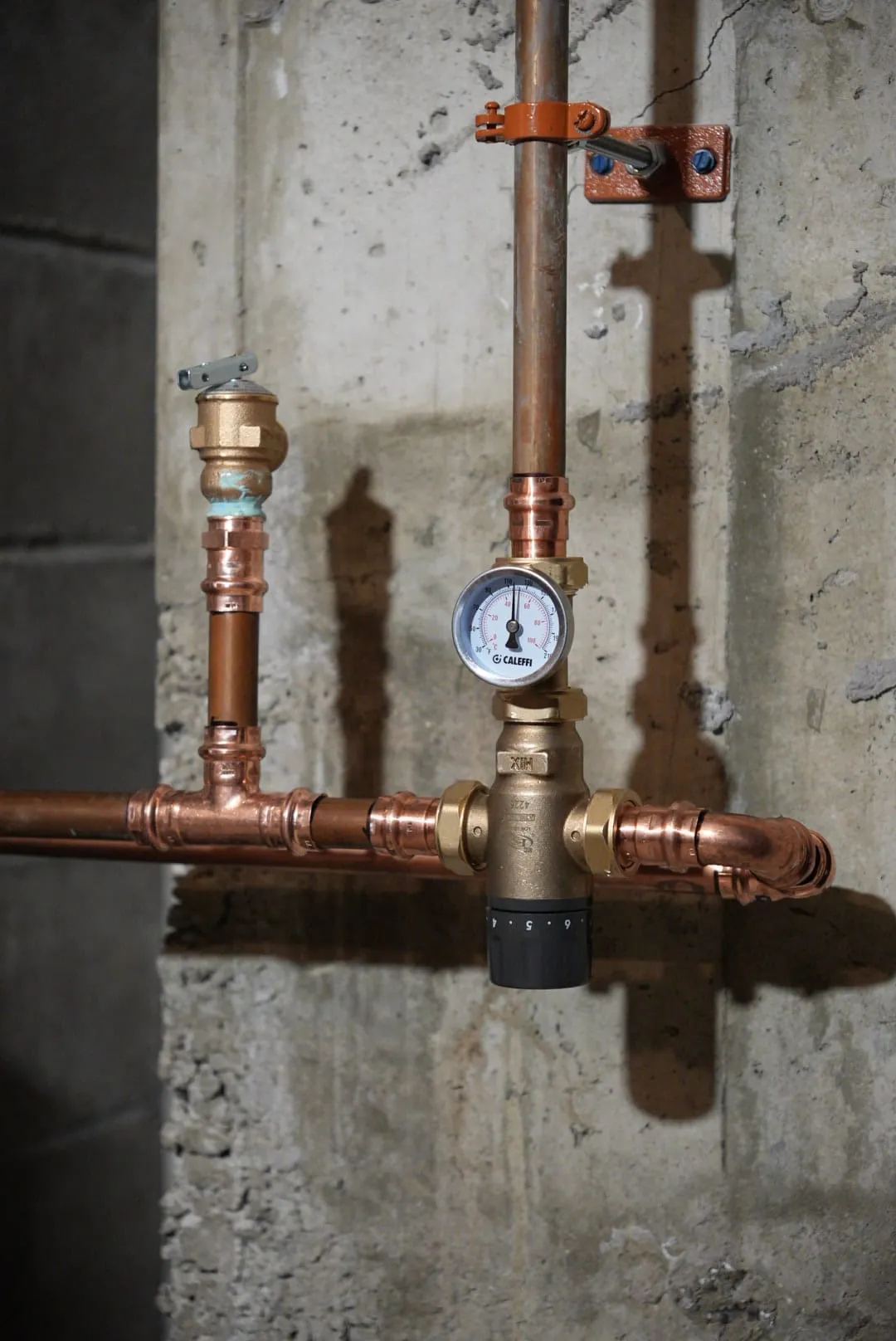
A mixing valve blends boiler water down to the lower temperature the floor needs. When it sticks, floors run too hot or too cold, and we repair or replace it along with the controls that run it.
Expansion tank and air control
The expansion tank, the air separator and the pressure setting keep air and pressure swings out of the loops. A failed tank causes pressure problems and air in the floors, so we test it and replace it when needed.
Flush and balance
Older systems collect sediment and air that block flow. We flush the loops and balance the flow so every zone gets heat.
How do we find the cause?
We start at the manifold, because supply and return temperatures and flow show which loop or part is failing. Then we check the pump, the valves, the mixing valve and the boiler in turn.
When do we ask for your approval?
Before we do any repair beyond the diagnostic, we tell you what failed and the price, in writing. We start only after you say yes.
What do you assess before installing hydronic radiant heat?
A hydronic radiant design starts with each room’s heat loss, the floor construction and the heat source.
Heat loss calculation
We calculate the heat loss of each room so the tubing spacing and water temperature fit the room. Insulation and window quality change the answer.
Tubing layout and loops
We lay out loops of similar length so each room heats evenly, and we plan where the manifold sits. Slab, subfloor and under-floor layouts each use different methods.
Zoning
We decide how many zones the house needs and what controls each one. Rooms with different uses or sun exposure usually deserve their own zone.
Boiler integration
We check whether the existing boiler can feed the floors through a mixing valve or whether a new boiler is the better answer. A modern condensing boiler pairs well with low-temperature floors.
Where the system goes
Slab-on-grade floors, basements, garages, additions, remodels and whole-home systems all work differently. We tell you which method fits your space.
What are the signs a hydronic system needs service?
These are the usual signs that a part in the loop has failed.
- One zone stays cold while the boiler runs
- Floors that are too hot in one area and cold in another
- A pump that is noisy, hot to the touch or not moving water
- A zone valve motor that hums but does not open
- Water, rust or crusty buildup at the manifold, a valve or a pump
- Gurgling or clicking sounds from the loops
- Pressure that drops, or a relief valve that discharges
Repair the part or replace the system?
Hydronic systems are repaired one part at a time until a major piece reaches the end of its life.
Usually a repair
- A single failed valve, pump or controller
- Air or sediment in the loops, which a flush and balance can clear
Usually time to replace
- A boiler at the end of its life
- A manifold that can no longer be sealed
- Obsolete controls that cannot be matched
Our radiant heating page has the full repair-or-replace guide.
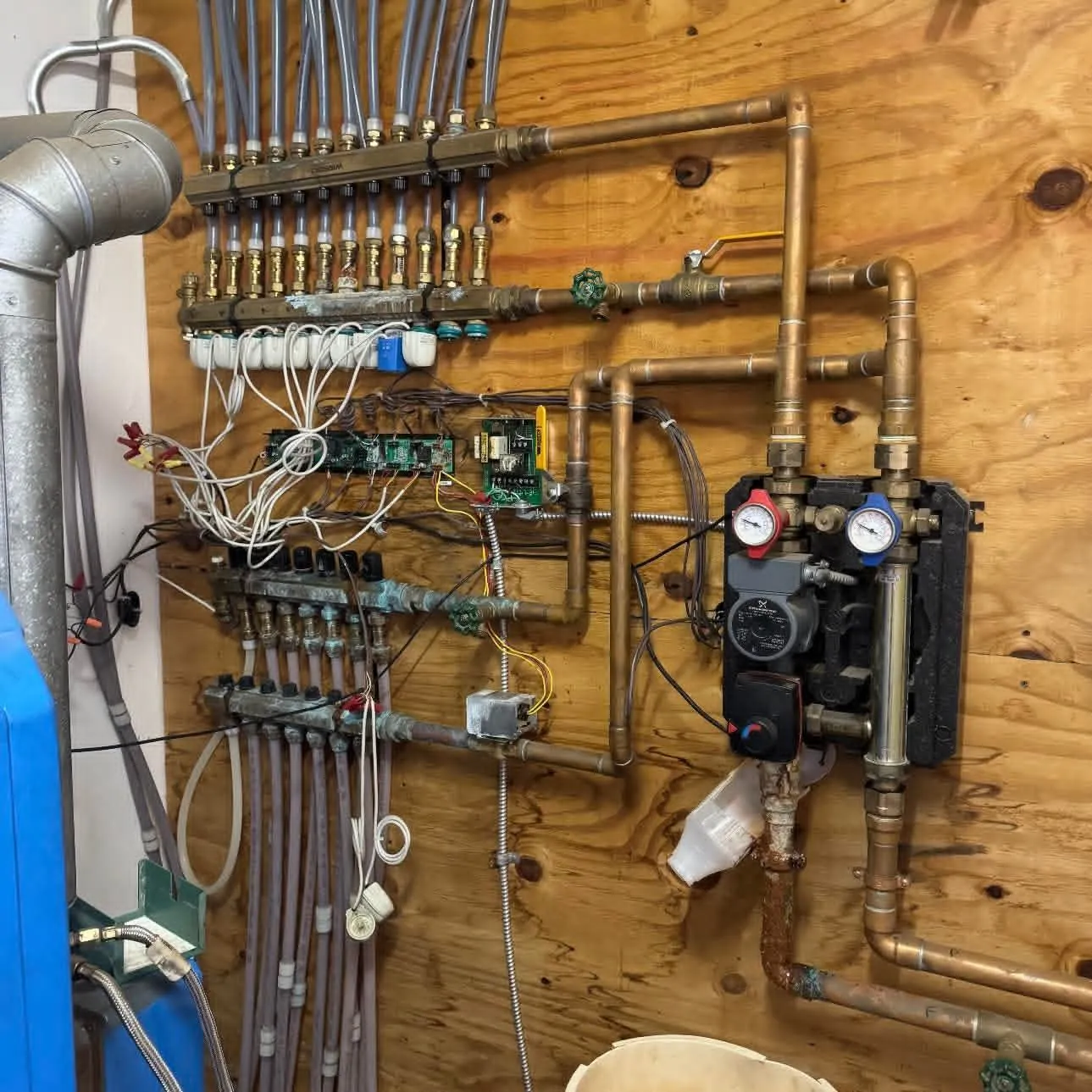
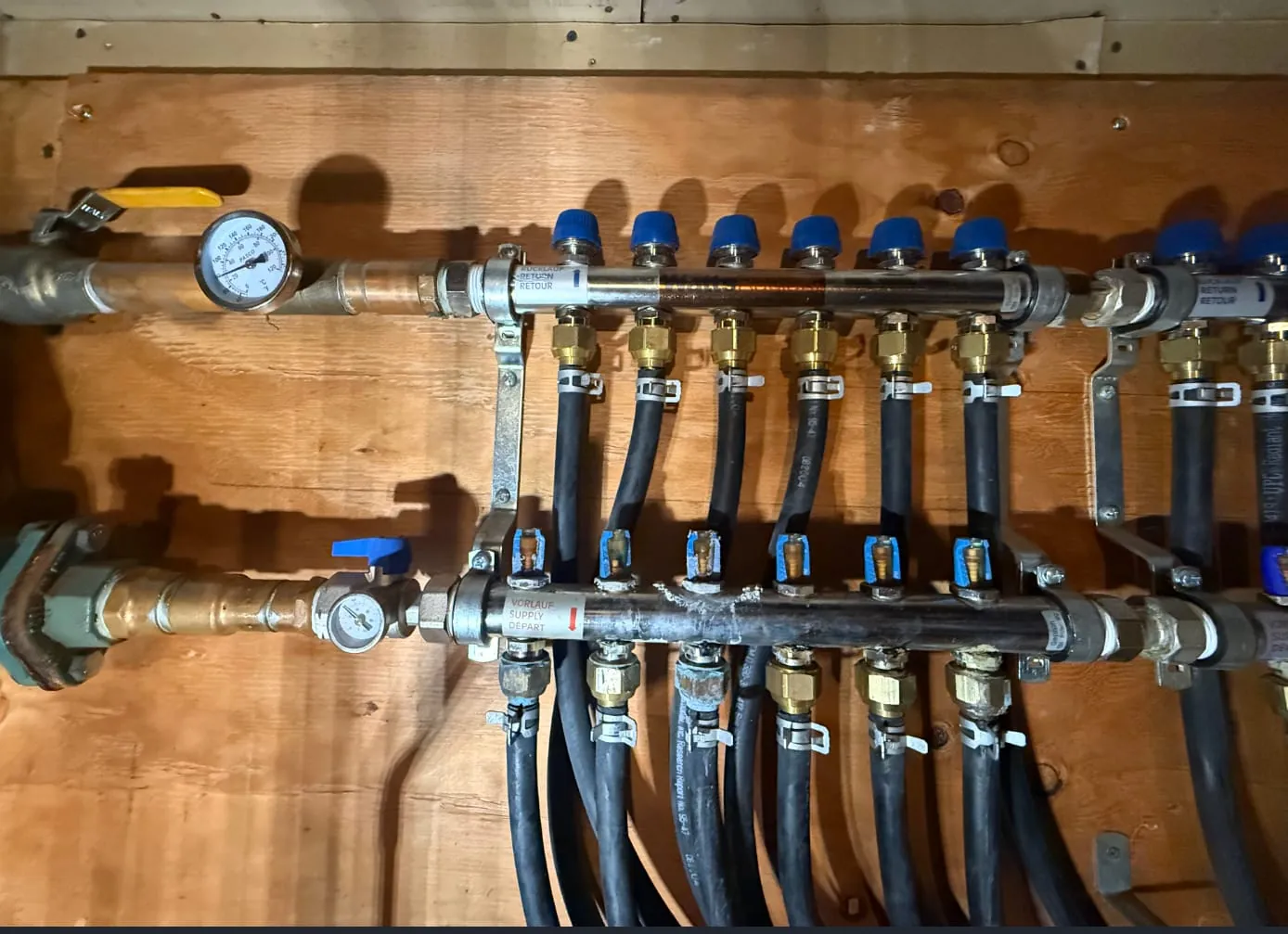
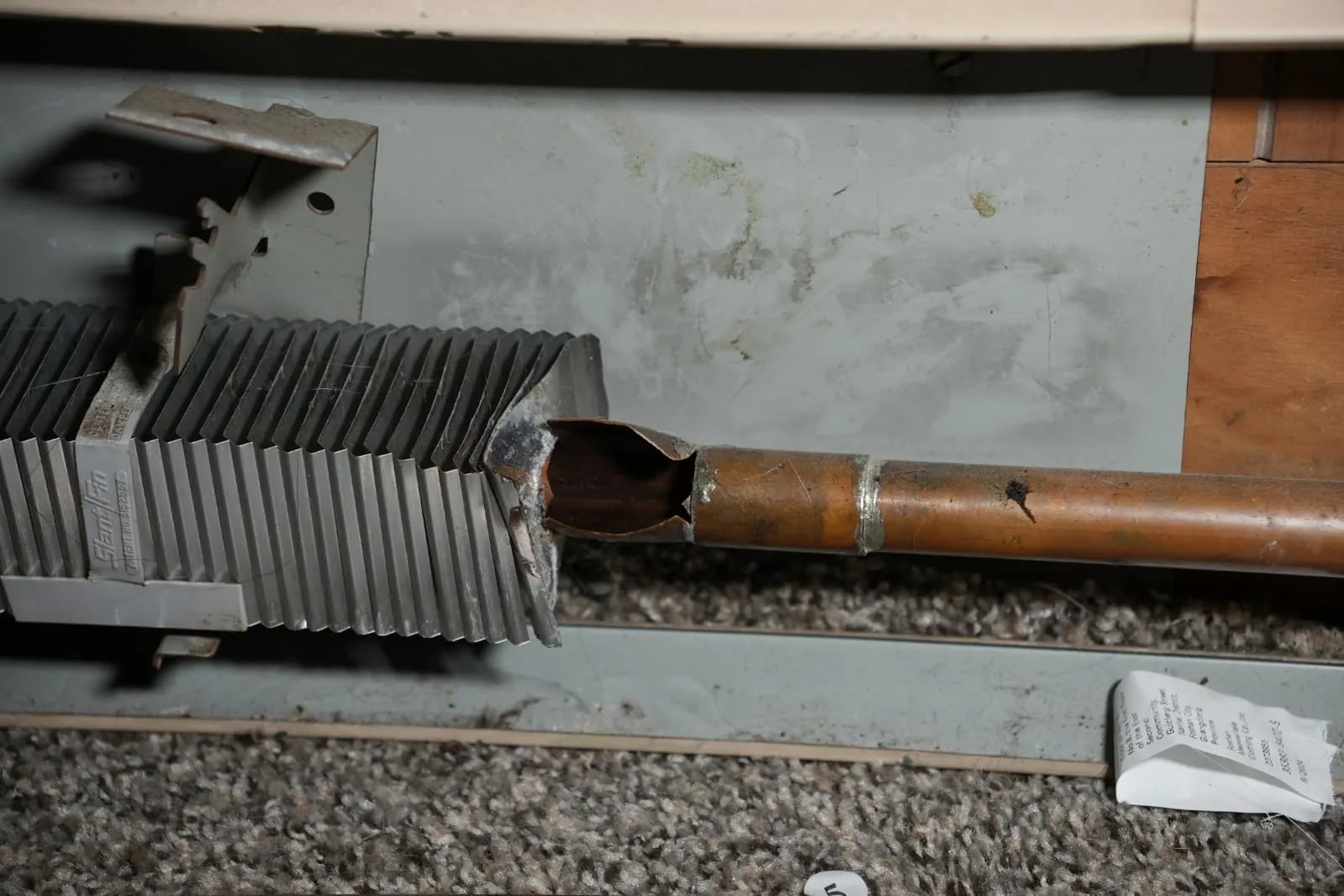
Hydronic & Radiant Heat: job photos
Real jobs, photographed by the technician who did the work.


How does a hydronic radiant visit work, and what does it cost?
Diagnostic. Hydronic repairs start with a paid diagnostic visit. We check supply and return temperatures at the manifold, then the pump, valves, mixing valve and boiler, and give you the repair price in writing before any work starts.
Estimate. A replacement boiler gets a free written estimate, and so does a new hydronic radiant job after a site visit.
What to have ready.
- Which zones or rooms are cold, and when it started
- The boiler’s brand and age, or a photo of its rating plate
- Photos of the manifold, pumps and valves if you can reach them
Book online. To book a non-urgent visit online, send the form; we confirm your visit by text. If your heat is out, call 508-521-9477.

Mass Save Heat Pump Installer Network participating contractor.
Rebates and the 0% HEAT Loan available.
Financing for new systems runs through Wisetack via Housecall Pro, subject to credit approval. Estimates on new systems are free.
Recent hydronic heating jobs
From our completed jobs, most recent first. Customer names and street addresses are left out.
- May 2026, Fall River. Boiler with baseboard heat: Maintenance and a baseboard leak repair.
- February 2026, Taunton. Zone valve: Replaced a failed valve.
- February 2026, Fairhaven. Hydronic boiler system: Repair and component replacement.
- December 2025, Taunton. Zone valves: Replaced two zone valves.
Where do you service hydronic radiant heating?
We work in Lakeville, New Bedford, Middleborough, Dartmouth, Fall River, Taunton, Wareham, Brockton, Fairhaven, and the rest of the SouthCoast, South Shore, Cape Cod and Rhode Island. See all service areas.
Brands we install · Hydronic & Radiant Heat
-

-

-

-

- Lochinvar
-

-

-

-

-

-

- Triangle Tube
-

-

-

-

-

-

- Energy Kinetics
-

-

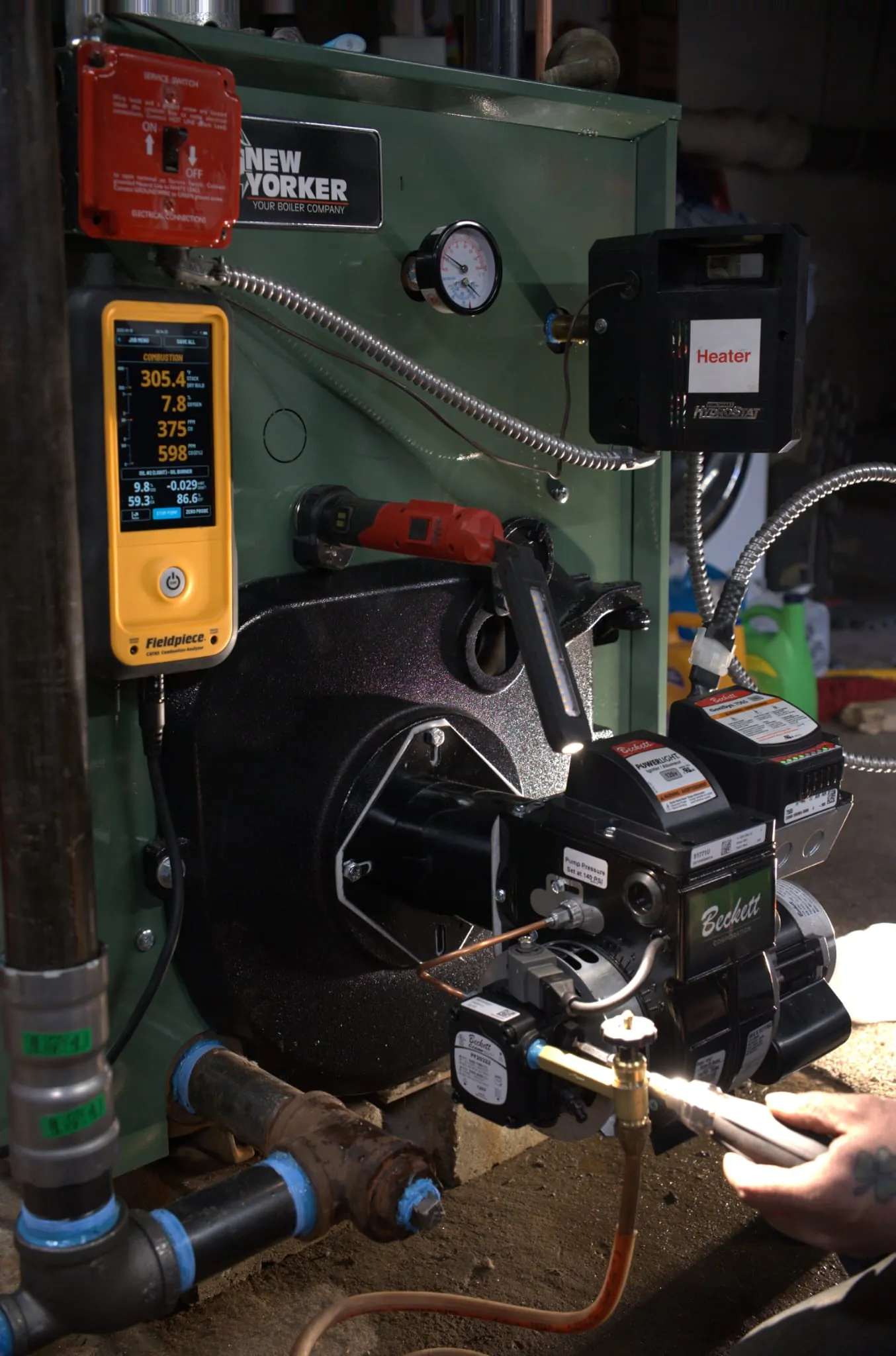
Add it to a maintenance plan
Seasonal tune-ups keep your boiler efficient and catch small problems before the first freeze.
See maintenance plansHydronic radiant heating questions, answered
What is the difference between hydronic and electric radiant heat?
Hydronic radiant heat uses a boiler and hot water in tubing. Electric radiant heat uses heating cables or mats in the floor. Our radiant work is hydronic.
Why does a hydronic floor need a mixing valve?
Because the floor needs cooler water than the boiler makes. The mixing valve blends boiler water down to the temperature the floor can use. A stuck mixing valve is a common reason floors run too hot or too cold.
My radiant zone is cold but the boiler is running. What is wrong?
The usual causes are a zone valve that will not open, a pump that has failed, or air in the loop. A diagnostic visit finds which one it is.
How often should a hydronic radiant system be serviced?
Once a year, along with the boiler. A yearly visit checks pressure, the expansion tank, the pumps and valves, and the boiler’s combustion. See HVAC maintenance.
Do you work on steam boilers?
Yes. A hydronic floor runs on a hot-water boiler, and a steam boiler is a separate system that we also handle: service, repair, replacement and new installation. Our boiler repair and installation page has the detail.
Can I bleed the air out of the loops myself?
We recommend leaving it to a technician. Purging a radiant loop needs the right equipment, and opening valves without it can let more air in or drain the system.
Schedule hydronic heating service in New Bedford & the SouthCoast
Call 508-521-9477, answered 24/7, or tap Book ASAP and the office confirms your visit by text.